
What Is the Best Oil Injected Screw Compressor in China?

Time:2026-10-29 Author:Henry
0%

Choosing the best Oil Injected Screw Compressor in China requires more than comparing horsepower or purchase price. The right machine must deliver stable air at the required pressure, flow, and duty cycle. It should also fit the plant’s climate, service access, and maintenance capability. Small details matter: a hot compressor room, a clogged intake filter, or an undersized dryer can affect daily performance.

The U.S. Department of Energy’s Improving Compressed Air System Performance: A Sourcebook for Industry estimates that compressed air accounts for about 10% of electricity use in U.S. manufacturing. Actual consumption varies by facility, but the figure shows why operating efficiency deserves close attention. The Compressed Air and Gas Institute’s verified performance data also offers a useful comparison framework, including package power and delivered capacity at stated conditions. These sources are not China-specific rankings, so they should inform—not replace—local measurements and service checks.

This guide compares compressor types and selection criteria, including specific power, pressure stability, oil carryover control, cooling, noise, and lifecycle support. Ask suppliers for performance data under comparable conditions, plus clear maintenance schedules and parts availability. Look past the brochure. A unit that performs well on paper may behave differently in a dusty workshop during a humid summer. And no single model suits every plant. The final choice should reflect measured demand, realistic operating hours, and the quality of support available near the installation site. A little uncertainty remains; that is a reason to verify, not guess.
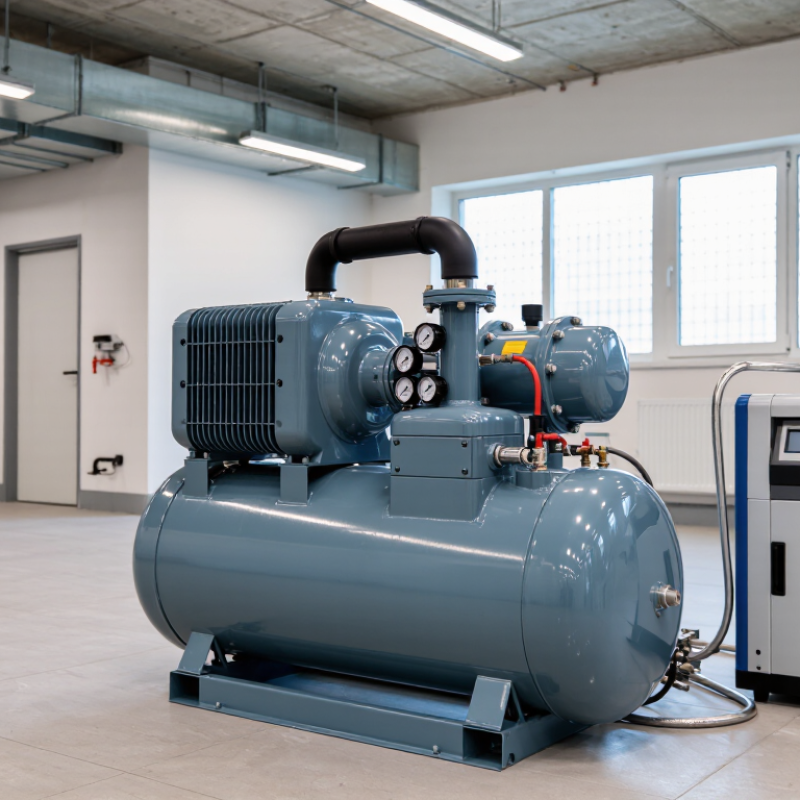
What Is the Best Oil Injected Screw Compressor in China?

What an Oil-Injected Screw Compressor Is and How It Works

An oil-injected screw compressor moves air with two meshing helical rotors inside a close-fitting housing. As the rotors turn, air enters through an inlet and travels along shrinking spaces between the rotor lobes. The trapped air becomes denser as its volume decreases. Oil is injected into this chamber during compression. It helps seal tiny clearances, carries away heat, and lubricates moving surfaces. A practical detail: oil is part of the process.

The compressed air and oil leave the air end together, then enter a separator vessel. There, most oil is removed from the air and returned through a filter and cooler. The cooled oil cycles back into the compressor, while air continues toward the receiver or application. Some residual oil may remain, so downstream filtration can matter for sensitive equipment. Not every installation needs the same treatment. Sizing depends on air demand, pressure, duty cycle, and required air quality.

In daily operation, temperature, pressure, and unusual noise offer useful clues, but none tells the whole story. A technician should compare readings with the unit’s manual and service history. Small leaks or a clogged separator can quietly raise energy use. That is easy to miss. The basic principle is simple, yet performance depends on maintenance and system design. I would not judge a compressor by its advertised capacity alone; real demand often fluctuates.

Key Performance Factors for Comparing Compressor Models

What Is the Best Oil Injected Screw Compressor in China?

A strong comparison starts with specific power, measured at a stated pressure and airflow. Check whether the figures use the same test conditions. ISO 1217 defines acceptance tests for displacement compressors, helping buyers compare performance on a consistent basis. Ask for the test method, inlet temperature, and delivered-air figures, not just motor power. The U.S. Department of Energy’s Improving Compressed Air System Performance guide reports that leaks can waste 20–30% of compressor output in a typical plant. That system-level loss can make an efficient machine appear costly to operate.

Leaks add up.

Next, match the model to real operating conditions: daily run hours, demand swings, and summer room temperatures. Verify oil carryover, separator replacement intervals, and the pressure drop across filters. These details affect air quality and maintenance costs. At a workshop, a blocked filter may quietly raise discharge pressure to meet the same tool demand. Confirm service access and parts availability near the installation site, too. A comparison can still be imperfect: catalogue data rarely captures every site condition. Treat quoted efficiency as a starting point, then request a measured acceptance test before purchase.

How Chinese Manufacturers Differ in Design and Support

Chinese oil-injected screw compressor manufacturers can look similar on paper, yet their engineering choices differ. Some prioritize compact packages for crowded workshops; others leave more space around the air end, oil separator, and filters. That clearance can make routine service easier. Small detail. Compare operating pressure, duty cycle, inlet conditions, and stated air delivery under the same test standard, not headline power alone.

Cooling design is another practical difference. A unit running in a hot, dusty plant needs a radiator that can be cleaned without removing nearby panels. Control systems vary too: basic controllers may suit stable loads, while variable-speed options can help when demand changes often. Savings depend on the actual load profile. Ask for performance data at several operating points, plus oil carryover and noise figures. Numbers matter.

Support is less visible than steel thickness. Check whether technicians can explain separator replacement intervals, oil specifications, and alarm history in plain language. Spare-part availability, commissioning guidance, and response times matter more than a polished brochure. Request a sample maintenance schedule and written warranty terms before ordering. A factory visit can help, though it cannot prove every future service promise. I would still ask who handles a breakdown after installation—and how quickly.

How to Match a Compressor to Your Operating Requirements

The best oil-injected screw compressor in China is the one that fits your actual operating conditions, not simply the largest model within budget. Start by measuring air demand during normal production, including short peaks when several machines start together. Measure at the point of use, too: pressure losses through long pipes, filters, and dryers can matter. Measure during production. Compare the required pressure and flow with the compressor’s published performance data, rather than relying only on its motor rating.

Consider daily running hours, ambient temperature, dust, and available maintenance support. A variable-speed unit may help when demand changes often, but it is not automatically the most efficient choice. Check expected energy use across your typical load range. For sensitive processes, specify suitable downstream filtration and drying, and confirm allowable oil carryover against equipment requirements. Small details matter. A spreadsheet can still miss leaks or unusual shifts in demand, so verify estimates with operating data where possible. There is rarely a perfect match on paper; leave room to question assumptions before selecting a unit.

What Is the Best Oil-Injected Screw Compressor in China?

Match the compressor to your required pressure, measured free air delivery (FAD), duty cycle, and site conditions—not just its rated motor power. The chart shows illustrative demand scenarios with a 20% capacity allowance; this is a planning example, not a universal sizing rule or a product specification.

How to use it: Confirm peak and average demand at the required pressure, then compare that demand with the compressor’s FAD at the same pressure. Account for leaks, pressure drops, temperature, altitude, and future demand before selecting a model.

How to Identify the Best Choice for Your Application

What Is the Best Oil Injected Screw Compressor in China?
How to Identify the Best Choice for Your Application

The best compressor is the one that meets your actual air demand, not the one with the largest motor. Record your required pressure, peak flow, and daily operating hours before comparing models. Check free air delivery at the stated pressure; a flow figure without its test conditions tells you little. Also consider the hottest room temperature and the dust around the intake. These details affect cooling, filtration, and maintenance intervals.

Energy use deserves careful attention. The U.S. Department of Energy’s Improving Compressed Air System Performance sourcebook notes that compressed air systems account for about 10% of industrial electricity use in the United States. That makes efficiency at your real operating point more useful than a headline rating. Compare specific power, measured in kW per unit of delivered air, and ask for performance data tested under recognized conditions. Small differences can matter over long shifts. They may not matter as much in a lightly used workshop.

Match the compressor to the whole system. Check whether the receiver, dryer, filters, and controls can support your required flow without causing pressure drops. For variable demand, ask whether variable-speed operation suits the load profile; it is not automatically the best option. Request service intervals, parts availability, and local response times in writing. A specification sheet can look reassuring. I would still verify the test data and confirm that the quoted capacity fits the site, because real installations are rarely as tidy as a spreadsheet.

What Is the Best Oil Injected Screw Compressor in China? - How to Identify the Best Choice for Your Application

Selection factor What to compare Application guidance How to verify
Required pressure Working pressure at the equipment, plus pressure losses in filters, dryers, piping, and fittings. Choose a compressor pressure rating that meets the actual system requirement. Higher pressure than needed can increase energy use. Measure pressure at the point of use during peak demand; confirm the rated pressure and performance data in the technical documentation.
Air delivery Free air delivery (FAD) at the required pressure, not just theoretical displacement or motor power. Size for measured demand and reasonable future growth. Account for simultaneous use and any planned backup capacity. Compare FAD figures stated at the same pressure and under comparable test conditions; check whether the rating follows ISO 1217 or an equivalent stated method.
Demand pattern and control How much demand varies over a shift, including periods of low or intermittent use. A variable-speed drive may suit fluctuating demand; fixed-speed control may suit steady, sustained demand. Suitability depends on the load profile and operating limits. Review measured demand over representative production cycles and compare expected energy use across the full operating range.
Energy efficiency Specific power at the required pressure and load, as well as part-load behavior and control losses. Compare systems at equivalent delivery and pressure. A lower purchase price alone does not show the lowest lifetime operating cost. Request documented performance data and calculate expected electricity cost using local tariffs and realistic annual operating hours.
Air quality and oil carryover Required particulate, water, and oil levels at the point of use, along with suitable downstream treatment. Oil-injected compressors use oil in the compression process. Applications with strict air-purity needs may require appropriate separators, filters, and dryers; some applications may require a different compressor arrangement. Define the required air-quality class using ISO 8573-1 where applicable, then verify the complete treatment system and measurement point.
Cooling and installation environment Ambient temperature, ventilation, altitude, dust, humidity, and available floor space. Hot, dusty, or poorly ventilated rooms can affect cooling and reliability. Confirm that the installation conditions are within the compressor’s stated limits. Check site conditions against the installation manual and confirm ventilation, cooling-air paths, and maintenance clearances before installation.
Reliability and maintenance Service requirements, consumable availability, diagnostic support, and recommended maintenance intervals. For continuous production, consider standby capacity and the consequences of unplanned downtime as part of the system design. Obtain the maintenance schedule, parts list, warranty terms, and written details of local technical support and response arrangements.
Total cost of ownership Purchase and installation costs, electricity, maintenance, treatment equipment, and downtime risk. Evaluate the complete compressed-air system over its expected service life, rather than comparing compressor prices alone. Use the same operating assumptions for each quotation, including pressure, delivered air, yearly hours, electricity tariff, and treatment requirements.
Overall best choice A compressor that reliably meets the site’s pressure, FAD, air-quality, control, and operating-cost requirements. There is no single best oil-injected screw compressor for every application; the right choice depends on the measured demand profile and installation conditions. Compare documented, like-for-like proposals and confirm performance and service commitments before purchase.

Note: Final selection should be based on site measurements and the compressor’s documented operating limits and performance data.

FAQS

What makes an oil-injected screw compressor the best choice?

The best model matches your actual airflow, pressure, and working hours. A larger motor alone proves little.

How can I compare compressor efficiency fairly?

Compare specific power at the same pressure and delivered airflow. Ask for the test method and inlet temperature. Numbers need context.

How should I choose the right compressor size?

Measure air demand during normal production and short peaks, such as several machines starting together. Check pressure at the point of use, too. Pipes and filters can reduce it.

Why should I check the compressor’s delivered-air figures?

Motor power does not show how much usable air reaches your equipment. Request free air delivery at the stated pressure and test conditions.

Can leaks affect operating costs?

Yes. Leaks may waste 20–30% of compressor output in a typical plant. Check the system before blaming the machine. Leaks add up.

Is a variable-speed compressor always more efficient?

No. It may suit frequent demand changes, but compare energy use across your usual load range. Not always.

What site conditions should I consider?

Check summer room temperatures, intake dust, daily run hours, and pressure drops across filters. A blocked filter can quietly raise discharge pressure.

What should I confirm about air quality and maintenance?

Check oil carryover, separator intervals, suitable filtration, and drying needs. Confirm nearby parts availability and service response times. Small details matter.

Should I rely on catalogue data alone?

Treat it as a starting point. Request a measured acceptance test and compare results with site operating data. A spreadsheet can miss leaks or unusual demand. I would still question the assumptions.

Conclusion

An Oil Injected Screw Compressor uses rotating screw elements to compress air, while injected oil helps seal the compression chamber, remove heat, and lubricate moving parts. When comparing models, consider more than rated output: assess airflow and pressure, energy efficiency, operating temperature, noise, maintenance needs, control options, and performance under continuous use. These factors determine how reliably a compressor can meet the demands of a particular site.

Chinese manufacturers may differ in component choices, engineering, customization, quality control, and the availability of technical support and spare parts. To find a suitable option, first define your required pressure and airflow, expected duty cycle, installation conditions, air-quality needs, and budget. Then compare documented performance and lifecycle costs, and check that service arrangements match your location. The best choice is not simply the largest or least expensive model, but one that consistently meets operating requirements with dependable efficiency and support.

Henry

Henry

Henry is a dedicated marketing professional with a profound expertise in the company's offerings. With years of experience in the industry, he possesses an impressive understanding of the market dynamics and consumer behaviors that drive success. Henry is committed to sharing his insights through......