
Selecting a 10 Hp Rotary Screw Compressor involves more than comparing headline prices. Buyers need to consider airflow, operating pressure, duty cycle, and available service support. These details affect whether a machine suits a small production line, an auto workshop, or a packaging facility. A compressor that looks suitable on paper may not match real demand. That matters.
This guide introduces 10 suppliers in China and outlines practical points for evaluating their offerings. It considers factors such as product range, stated specifications, customization options, and export or after-sales information where available. Supplier details and product lines can change, so readers should confirm current specifications directly before making a purchase. Ask for clear data sheets, warranty terms, and service arrangements. Check whether the quoted airflow meets your tools’ actual requirements, not just the compressor’s advertised capacity.
No supplier list can replace a site assessment. Installation space, ventilation, power supply, and noise levels all deserve attention. A quieter machine may be preferable near work areas, while a compact footprint can help in a crowded workshop. Still, these advantages depend on the actual model and installation conditions. The comparisons ahead are a starting point, not a final verdict. Some information may be incomplete, and that is worth acknowledging. Careful verification helps buyers narrow their choices and avoid paying for capacity or features they do not need.
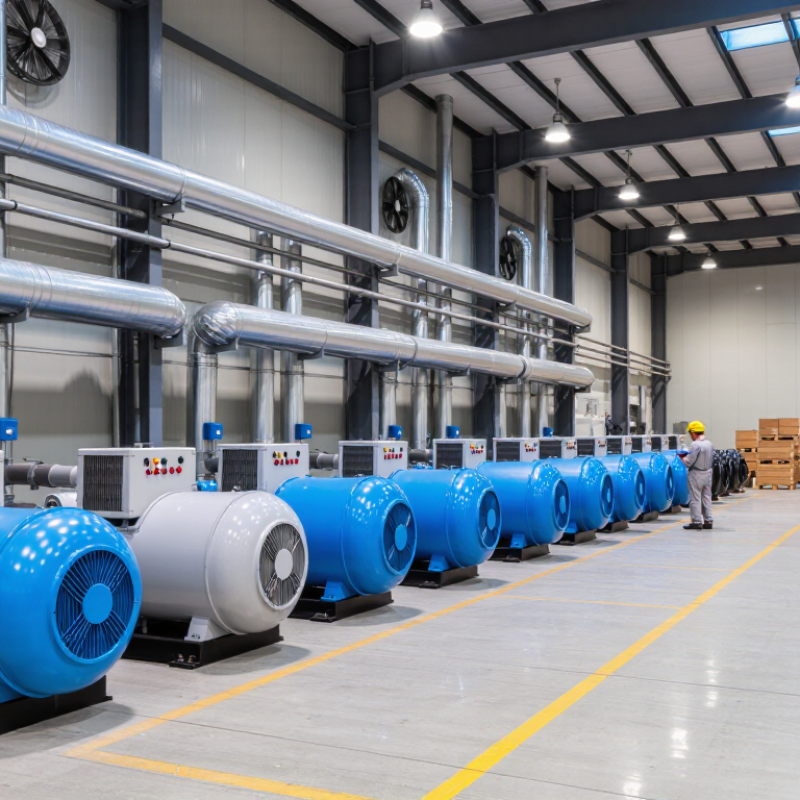
A 10 HP rotary screw compressor uses a motor rated at about 7.5 kilowatts to drive two intermeshing rotors. As the rotors turn, they trap and compress air continuously, unlike a piston machine that delivers air in pulses. That distinction matters. The horsepower rating describes motor power, not the amount of usable compressed air reaching a tool. Actual airflow depends on operating pressure, compressor design, cooling, and system losses.
When comparing suppliers, check the stated airflow at your required pressure, not just the 10 HP label. Ask whether the figure reflects continuous operation and what test conditions were used. Numbers need context. A workshop running spray equipment may need steadier airflow than one powering intermittent air tools. Also examine the control system, service access, noise level, and cooling requirements. A crowded room with poor ventilation can affect performance.
Oil-injected and oil-free models serve different air-quality needs, so confirm the required air specification before choosing. I would not treat a larger receiver as a substitute for adequate compressor output; it stores air but does not create it. Details vary by installation. Even a carefully specified unit can disappoint if piping is undersized or filters are neglected. Check the duty cycle and maintenance schedule against the real workday, then compare documented performance under matching conditions.
China’s 10 HP rotary screw compressor market is not a single, uniform supplier pool. It is organized around equipment manufacturers, contract assemblers, and trading distributors. Some factories engineer major components and controls in-house. Others assemble sourced parts to meet a buyer’s specifications. That distinction can affect customization, technical documents, and after-sales support. Not always obvious.
A 10 HP rating commonly corresponds to about 7.5 kW, but it does not tell buyers the whole story. Suppliers may offer fixed-speed or variable-speed models, packaged units, or systems with air tanks and dryers. Their product ranges often serve workshops, small production lines, and service facilities. Export-oriented sellers may also coordinate packaging and shipping, while local distributors may focus more on installation and maintenance.
Compare delivered airflow at the required pressure, not horsepower alone. Check voltage, duty cycle, noise data, warranty terms, and the availability of replacement filters. Ask for a configuration sheet that lists the compressor, tank, dryer, and controls together. A quoted package can look complete but omit installation needs. Even careful comparisons leave room for uncertainty: published performance figures may use different test conditions, so confirm the basis before choosing a supplier.
A 10 HP rating alone cannot show whether a rotary screw compressor fits your workshop. Compare suppliers using airflow delivered at a stated pressure, not motor power alone. Ask for the rated free air delivery, operating pressure, motor voltage, and cooling method. These details matter when the unit must run a pneumatic line through a full shift. Check the proposed duty cycle and ambient temperature range, too. A brochure may look complete, but missing test conditions leave room for doubt.
Tips: Request a test report for the exact configuration you plan to buy. Confirm the tank, dryer, and filters are included—or priced separately. A clear quotation saves awkward surprises later.
Assess manufacturing quality through specific evidence. Ask how each unit is inspected, what warranty applies, and whether common service parts are available. Request the parts list and maintenance intervals before placing an order. For international delivery, clarify packaging, lead time, commissioning support, and who handles technical questions after arrival. Video calls can help verify a factory’s assembly process, though they cannot replace an independent inspection. I would not judge reliability from polished photos alone; that shortcut is tempting, but weak. Compare written specifications and service commitments across suppliers, then confirm that every promise appears in the final quotation.
Use this framework to compare up to 10 suppliers. It provides evaluation criteria and a suggested weighting system; it is not a verified ranking or a set of supplier-specific claims. A 10 HP motor is approximately 7.5 kW. Confirm all performance figures against the proposed model and test documentation.
| No. | Evaluation criterion | Suggested weight | What to verify | Useful evidence or comparison method |
|---|---|---|---|---|
| 1 | Air delivery and pressure performance | 18% | Compare delivered flow at the same working pressure, voltage, frequency, and operating conditions. Do not compare nominal motor power alone. | Request a performance curve and a test report referencing ISO 1217 or another clearly stated test method. |
| 2 | Energy efficiency and control | 18% | Assess specific power or power consumption at the required flow and pressure, plus unloaded power and control behavior under changing demand. | Compare like-for-like test data, control settings, and estimated annual energy use based on your actual operating hours and electricity tariff. |
| 3 | Quality management and traceability | 12% | Check whether the manufacturer has documented production controls, inspection records, and traceable serial numbers for finished units. | Review the scope and validity of any ISO 9001 certificate, along with sample inspection and factory acceptance records. |
| 4 | Air quality and system configuration | 8% | Confirm whether the application needs an aftercooler, moisture separator, dryer, or filters; an oil-injected compressor does not by itself provide oil-free air. | Specify the required air purity using ISO 8573-1 classes and request component data for the proposed treatment package. |
| 5 | Reliability, cooling, and maintainability | 10% | Review operating temperature limits, ventilation requirements, service access, alarm functions, and the recommended maintenance schedule. | Request an operation and maintenance manual, parts list, maintenance intervals, and details of protections such as high-temperature shutdown. |
| 6 | After-sales service and spare parts | 10% | Establish service coverage for the destination country, response channels, technical support hours, and availability of routine consumables. | Ask for a written service plan, spare-parts lead times, parts pricing, and the location or logistics method for parts supply. |
| 7 | Warranty and claim terms | 6% | Check the warranty duration, start date, covered components, exclusions, labor and freight responsibility, and claim procedure. | Evaluate the written warranty supplied with the quotation; clarify whether operating hours or maintenance conditions limit coverage. |
| 8 | Electrical and installation compatibility | 5% | Match supply voltage, frequency, phase, enclosure, connection size, and installation requirements to the site and destination-market regulations. | Review the nameplate, wiring diagram, dimensional drawing, electrical documentation, and any applicable conformity documents. |
| 9 | Delivery, packaging, and export readiness | 5% | Confirm production lead time, shipping terms, packaging protection, documentation, and responsibility for export and import arrangements. | Request a written delivery schedule, packing details, commercial invoice information, and the agreed Incoterms rule. |
| 10 | Total cost of ownership and transparency | 8% | Compare purchase price with energy, maintenance, consumables, freight, installation, and expected downtime over the planned ownership period. | Use a consistent calculation period and operating profile; request itemized quotations and documented assumptions for estimated costs. |
| Total suggested weighting | 100% | Score each supplier against the same requirements and supporting evidence. | ||
Suggested scoring: rate each criterion from 1 (poor or unsupported) to 5 (strong and documented), then apply the listed weight. Performance and efficiency should be compared under equivalent conditions.
Profile one is an integrated manufacturer, assembling compressors and testing finished units in-house.
Profile two focuses on screw air ends, with attention to rotor machining and clear service guidance.
Profile three emphasizes energy use and provides measured operating data.
Profile four handles export orders, with documentation and packaging suited to overseas shipping.
Profile five offers configurable voltage, frequency, and pressure options; confirm these against the actual nameplate.
Profile six builds compact units for workshops where floor space matters.
Profile seven specializes in controller setup, alarms, and operating records.
Profile eight supplies packaged systems with dryers and filters, useful when clean, dry air is required. A bundled package may simplify installation, but check each component’s capacity.
That detail matters.
Profile nine focuses on replacement parts and maintenance support, including oil and filter availability.
Profile ten serves smaller buyers with flexible order quantities, though lead times may vary.
For any supplier, request a specification sheet showing airflow at the stated pressure, power input, noise level, and test conditions.
A tidy brochure is not proof.
Compare the warranty, service response, and parts list in writing; I would not choose by price alone.
Some details are easy to overlook.
A 10 HP rotary screw compressor can serve repair bays, small production cells, packaging lines, and workshops using air tools. Its suitability depends on actual airflow demand, not horsepower alone. Ask suppliers for delivered free-air capacity at your required pressure, preferably supported by a performance test report. Check whether demand runs steadily or peaks when several tools start together. A receiver tank can soften short peaks, but it cannot fix an undersized compressor. Small detail: confirm the unit can fit through the workshop door.
Supplier comparisons should include energy use, maintenance access, noise, warranty terms, and local service response. The U.S. Department of Energy’s Improving Compressed Air System Performance sourcebook reports that leaks can waste 20–30% of compressor output. That makes leak checks and system advice relevant supplier questions, not afterthoughts. Ask how often filters and lubricant need changing, and whether replacement parts are readily available. ISO 1217 provides a recognized basis for testing compressor performance, so request comparable test conditions across quotations. A caveat: published figures may not match your site’s temperature, pressure, or duty cycle. Visit a comparable installation if possible, and verify claims against your own operating data.
Compare the operating pressure commonly required by different compressed-air applications when evaluating suppliers.
How to use this chart: These are indicative application ranges, not guaranteed equipment specifications. Confirm each machine’s pressure and air demand, then compare suppliers’ free air delivery (FAD) at your required pressure, duty-cycle rating, air-treatment options, energy use, and local service support. A 10 HP compressor’s output varies by model and operating conditions.
Compare airflow, power input, noise, warranty terms, service response, and parts availability. Get these details in writing.
No. Check delivered airflow at your required pressure and compare it with actual tool demand. Horsepower alone can mislead.
Ask for a specification sheet with airflow, pressure, power input, noise level, and test conditions. Comparable data helps.
It can soften short demand peaks, such as several tools starting together. It cannot fix an undersized compressor.
Confirm that each component can handle the required capacity. A bundled package may simplify installation, but fit still matters.
Measure the unit and the route to its location, including doorways and tight turns. A compact model may save floor space.
Ask how often filters and lubricant need changing. Confirm replacement-part availability and access for routine service.
Leaks can waste a notable share of compressor output. Ask about leak checks, then compare supplier claims with your own site data. Site conditions matter.
This article explains what defines a 10 Hp Rotary Screw Compressor, including its basic operating principles, typical capacity, and suitability for steady compressed-air demand. It also outlines how China’s compressor market is organized, from manufacturers and engineering-focused producers to suppliers serving different industries and regional needs. Readers will find practical criteria for evaluating suppliers, such as product specifications, energy efficiency, build quality, customization options, technical support, and the clarity of warranty and service arrangements.
The article also presents profiles of ten Chinese suppliers without relying on brand promotion, highlighting the kinds of capabilities buyers may compare. Finally, it considers applications in settings such as workshops, manufacturing facilities, and other operations that need a dependable air supply. By matching required airflow and pressure with operating conditions, installation needs, maintenance resources, and supplier support, buyers can make a more informed choice for their compressed-air requirements.
