
Choosing the right Diesel Powered Air Compressor begins with understanding the worksite, not just comparing engine horsepower. A reliable unit must match the required air pressure, flow rate, operating hours, and working environment. A road construction crew may need continuous airflow for rock drills, while a maintenance team may only require short bursts for pneumatic tools. These demands produce very different equipment choices.
Field experience shows that portability, fuel capacity, and service access often matter more than impressive specifications. Check whether the compressor can move safely across uneven ground, fit through site entrances, and operate near dust or moisture. A clearly visible pressure gauge helps operators monitor performance quickly. Easy access to filters, belts, and oil points can also reduce unnecessary downtime. Small details matter.
Noise, exhaust management, and local operating requirements deserve careful attention. Diesel models can deliver strong performance in remote locations, but they need regular inspections and responsible fuel handling. Manufacturers may publish excellent efficiency figures, yet real results vary with temperature, altitude, load, and maintenance quality. That is where many purchasing decisions become uncertain. A larger compressor is not automatically the better choice. Oversizing can increase fuel use and maintenance costs, while an undersized unit may struggle continuously.
This guide examines practical selection factors, including air output, pressure ratings, engine reliability, cooling systems, mobility, controls, and lifecycle costs. It also encourages buyers to question assumptions and verify specifications with qualified suppliers. The best decision is not always the cheapest or most powerful. It is the unit that performs consistently, remains serviceable, and fits the people and conditions using it.
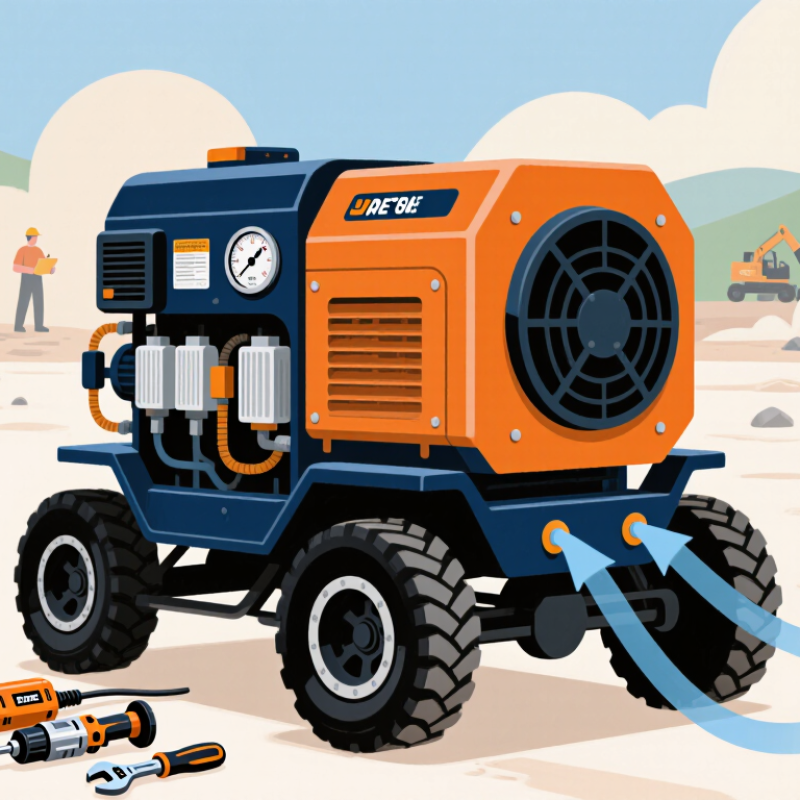
How to Choose a Diesel Powered Air Compressor?
Diesel-Powered Air Compressors: Definition and Operating Principles
A diesel-powered air compressor combines a diesel engine with a compressor element. It produces pressurized air without grid electricity. The engine turns a screw or piston mechanism through a direct coupling or gearbox. Air enters through a filter, becomes denser during compression, and moves into the discharge line. A receiver tank, separator, and control valve help stabilize delivery.
The U.S. Department of Energy reports that compressed-air systems may consume 10–30% of industrial electricity. Its technical sourcebook also estimates that leaks can waste 20–30% of compressor output. Diesel units still need the same discipline. Check hoses, fittings, filters, and pressure settings before blaming the engine. Small leaks become audible near quiet job sites. Very audible.
When choosing a unit, compare actual airflow and working pressure, not peak figures alone. Match the compressor to continuous demand, altitude, temperature, and expected duty cycles. The European Commission’s energy-efficiency guidance treats compressed-air performance as a system issue, supporting regular maintenance and load matching. Measure fuel use under real operating conditions. A catalogue rating is not field truth. I have seen a large machine run inefficiently because the application needed lower pressure and intermittent airflow. Noise, exhaust routing, tank capacity, service access, and emergency shutdown controls also deserve attention. The cheapest purchase can become an expensive daily habit.
Diesel-powered air compressors use a diesel engine to drive a compressor element, converting fuel energy into compressed air. The required operating pressure is one of the key factors when selecting a suitable unit.
The chart shows common pressure settings and their approximate PSI equivalents. Actual airflow, fuel consumption, and performance depend on compressor design, engine size, altitude, temperature, and load conditions. Conversion used: 1 bar = 14.5038 psi.
Choosing a diesel-powered air compressor begins with actual demand, not engine size. In field service, I measure each tool’s airflow at its working pressure. Airflow should be checked at pressure, not only by free-air rating. A breaker may need 90 psi, while a blast nozzle can consume much more. Add 15–20% reserve for leaks, cold starts, and simultaneous tools. Oversizing is not always better. It increases fuel use, transport weight, and maintenance.
Pressure must reach the tool inlet, even through long hoses. Narrow hoses and extra couplings create noticeable pressure loss. Use the hose length and diameter when estimating the required outlet pressure. A compressor rated at 125 psi may still deliver weak tool performance at the work site. Confirm the duty cycle, too. Continuous pneumatic tools need stable airflow, while intermittent tools may tolerate a receiver tank. That distinction is easy to overlook.
Match the required airflow and pressure with the diesel engine’s usable power. High altitude, hot weather, and clogged filters reduce engine performance. Check net horsepower at operating conditions, rather than relying on peak figures. Fuel consumption at rated load also affects daily operating cost. Cooling capacity, filtration, and service access matter in dusty locations. I have seen accurate calculations fail because small leaks were ignored. Test the compressor with real tools for fifteen minutes, then watch pressure stability, fuel use, and exhaust condition. The worksheet may need revision.
Choosing a diesel powered air compressor starts with the compressor type, not the engine badge. Rotary screw models deliver steady airflow for road work, blasting, and continuous pneumatic tools. They run smoothly, but their oil system needs disciplined filtration and temperature checks. Reciprocating compressors suit intermittent jobs, such as tire service or small repair crews. They cost less to maintain initially, yet pulsating airflow can frustrate sensitive tools. That difference matters on a dusty site.
Oil-free designs protect air purity, but they often demand tighter manufacturing tolerances and careful servicing. Oil-flooded units usually tolerate demanding duty better and may offer longer component life. However, air quality still depends on separators, drains, and maintenance records. Do not confuse low purchase price with low operating cost. Fuel use changes sharply when a diesel engine runs far below its ideal load. Variable-speed control can reduce waste, although it adds control complexity.
Engine choice should match altitude, climate, duty cycle, and transport frequency. Turbocharged engines maintain power better at elevation, while simpler engines may be easier to service remotely. Electronic controls improve monitoring, but sensors can become another failure point. I once selected capacity from peak demand alone; the unit spent most days lightly loaded. That estimate was wrong. Measure actual tool demand, starting surges, hose losses, and idle hours before buying. Check cooling access, fuel filtration, and technician skills near the worksite. Small details decide whether compressed air feels dependable at six in the morning.
Choosing a diesel-powered air compressor begins with the jobsite, not the engine size. Portability means more than wheels. Check dry weight, lifting points, ground clearance, and trailer balance. A unit that fits through a narrow gate can still fail on soft clay. Measure the route, including ramps and turning space. For frequent moves, compact frames reduce handling time, but smaller receivers may cause more cycling. Test it onsite.
Fuel use needs comparable operating data. The U.S. Energy Information Administration lists diesel at about 137,381 Btu per gallon in its energy conversion factors. Use that figure only as an energy reference; actual consumption depends on pressure, flow, load, and idle hours. Ask for fuel burn at your required working point. “Per hour” figures at no load can mislead. The U.S. Department of Energy’s Improving Compressed Air System Performance sourcebook estimates leaks may waste 20–30% of compressor output. A leak at the hose coupling becomes a fuel expense.
Working conditions change the selection. Dusty demolition sites need accessible filters and clear service intervals. Cold starts require suitable oil, battery capacity, and fuel management. At altitude, thinner air can reduce engine and compressor performance; confirm derating data before purchase. Heat, rain, and salt air also test enclosures and connections. ISO 1217 performance testing improves comparison, but it cannot reproduce every site. I would leave reserve capacity, though that may increase fuel use. Perfect sizing is rarely perfect.
Choosing a diesel-powered air compressor requires more than comparing airflow and purchase price.
Safety features deserve close attention, especially on dusty or remote job sites. Look for an emergency stop, guarded belts, automatic shutdowns, and clear pressure controls. An emergency stop matters.
During a site inspection, check whether operators can reach controls without crossing hot surfaces. Confirm that warning labels remain readable and protective covers fit securely. These details matter.
I also recommend reviewing the operating manual and applicable workplace safety requirements with trained personnel. A low-noise enclosure can reduce fatigue, but it may make maintenance access less convenient.
Maintenance records reveal how much ownership may really cost.
Ask about oil, fuel, air-filter, and coolant service intervals. Keep records. I once saw a compressor lose output because a clogged filter was ignored for several weeks. The repair was avoidable, though the operator had followed the schedule too loosely.
A diesel unit should also be inspected for leaks, loose hoses, battery condition, and tire or frame damage when mobile use is expected.
Calculate total ownership cost over several years.
Include fuel consumption, filters, lubricants, scheduled servicing, transport, training, and unexpected downtime. A cheaper machine may cost more when fuel use is high or parts are difficult to obtain. Request realistic fuel figures under your expected load, not only laboratory ratings.
Check warranty terms carefully, and ask who provides qualified service nearby. Reliability is partly mechanical, but it also depends on disciplined daily inspections.
Measure each tool’s airflow at its working pressure. Free-air ratings can mislead. Add about 15–20% reserve for leaks, cold starts, and simultaneous tools.
Long, narrow hoses and extra couplings create pressure loss. Check the hose length and diameter. A 125 psi rating may still produce weak tool performance onsite.
No. Oversizing increases fuel use, transport weight, and maintenance. Choose enough capacity for actual demand, with a reasonable reserve. More power is not always wiser.
Request fuel use at your expected pressure and airflow. No-load hourly figures may mislead. Include idle time, daily operating hours, and changing workloads in your estimate.
High altitude, hot weather, dust, cold starts, and salt air can reduce performance. Confirm derating data. Check filters, cooling, batteries, oil, and enclosure protection.
Check dry weight, lifting points, ground clearance, and trailer balance. Measure gates, ramps, turns, and soft ground. Wheels alone do not guarantee easy movement.
Look for an emergency stop, guarded belts, automatic shutdowns, and clear pressure controls. Keep operators away from hot surfaces. Readable warnings matter.
Include fuel, filters, lubricants, servicing, transport, training, repairs, and downtime. Keep maintenance records. A clogged filter can quietly reduce output for weeks.
Yes. Run actual tools for about fifteen minutes. Watch pressure stability, fuel use, leaks, and exhaust condition. The worksheet may need revision.
Choosing the right Diesel Powered Air Compressor begins with understanding how diesel engines generate power to drive the compressor and deliver compressed air for demanding applications. Start by calculating the required airflow and pressure, then match these figures with the tools, equipment, and tasks the compressor will support. It is also important to compare compressor designs, such as rotary and reciprocating systems, along with diesel engine options that offer suitable performance and durability.
Consider the working environment before making a decision. Portability, fuel consumption, operating hours, noise, ventilation, and terrain can all affect practical performance. Safety features, simple maintenance access, reliable filtration, and protective controls should also be carefully evaluated. Finally, look beyond the purchase price by comparing fuel costs, service requirements, expected lifespan, and downtime. A well-selected compressor should provide dependable air output, efficient operation, safe handling, and reasonable total ownership costs over its working life.
