
7 Tips for Buying an Air Compressor With Belt?

Time:2026-09-09 Author:Ethan
0%

Choosing an Air Compressor With Belt requires more than comparing horsepower and price. A belt-driven unit can offer practical service access, smoother starting, and flexible motor replacement. However, poor belt tension or pulley alignment may create vibration, heat, and unexpected downtime. I have seen a small misalignment mark a pulley within weeks. That detail matters.

The U.S. Department of Energy reports that compressed-air systems can represent a significant share of industrial electricity use, often around 10% of a facility’s industrial power consumption. Its Compressed Air Challenge guidance also stresses leak detection, pressure management, and proper maintenance. Industry assessments commonly estimate that leaks waste 20% to 30% of compressor output, although actual losses vary by site, age, and operating pressure. The numbers are useful, but they are not universal.

This guide presents seven practical tips for selecting an Air Compressor With Belt for workshops, garages, and production areas. It considers airflow, pressure, duty cycle, tank size, belt protection, noise, and long-term operating cost. A larger tank is not always better. A higher horsepower rating can also disappoint when delivered airflow is ignored. Buyers should compare CFM at working pressure, not marketing claims alone. Check service access. Inspect the guard. Ask about replacement belts and local technical support. These small checks can prevent expensive mistakes. Even experienced buyers should review the application again, because real demand often differs from the original estimate.
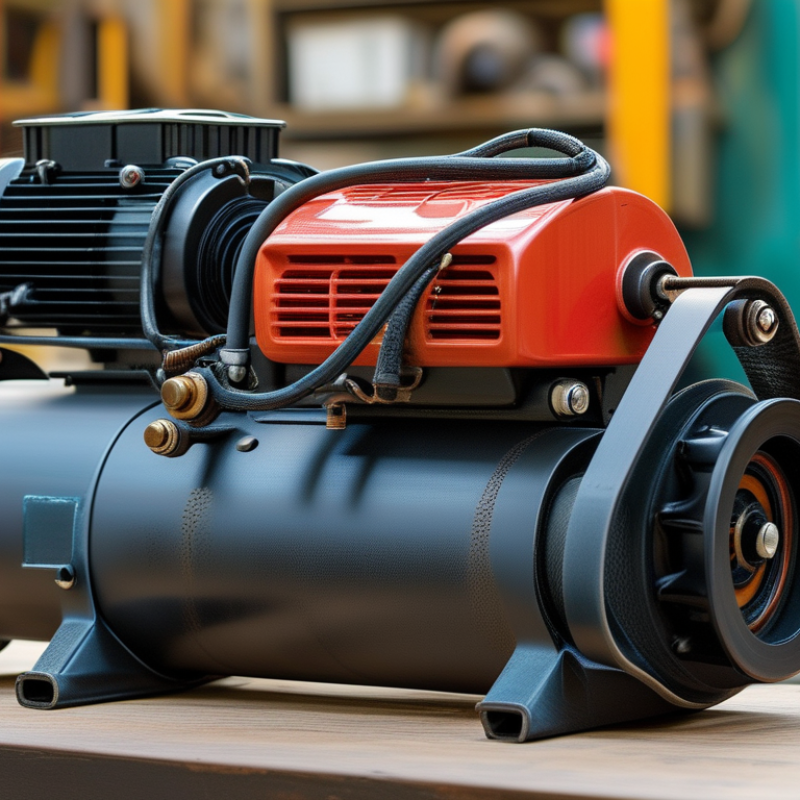
7 Tips for Buying an Air Compressor With Belt?

Define Air Demand: Size for 20–30% Extra CFM at 90–100 PSI

Buying an air compressor with a belt drive starts with measuring real air demand. Check each tool’s CFM rating at 90–100 PSI, not only its maximum pressure. Add the CFM values for tools used at the same time. Then choose a compressor delivering 20–30% extra CFM. This margin helps cover pressure drops, hose restrictions, and changing workloads. A small reserve matters.

Tip: Do not size the compressor by tank capacity alone. A large tank can support short bursts, but it cannot replace sufficient airflow. I once relied too heavily on tank volume during frequent pneumatic sanding. The compressor recovered slowly, and the pressure fell below the tool’s working range. That experience changed how I compare machines.

Belt-driven models often run more quietly and allow better heat management than many direct-drive designs. Still, inspect the belt guard, adjustment range, and service access. A loose belt can reduce output and create vibration. Leave clear space around the unit for cooling, especially in a warm workshop. If your calculated demand is 12 CFM, a practical target may be about 14.5–15.5 CFM at the required pressure. Verify that figure in the technical data, because advertised displacement may exceed delivered airflow.

Tip: Test your actual setup. Record pressure while the longest hose, filter, and tool are operating. The result may challenge your original estimate. That is useful information, not failure. Adjust the compressor size, piping, or duty cycle before purchasing.

Compare Belt-Drive Motors: Evaluate 5–15 HP Ratings, RPM, and Duty Cycle

When comparing belt-drive air compressors, do not treat horsepower as the whole decision. A 5 HP motor may suit intermittent workshop tools, while a 15 HP unit can support heavier demand. The useful comparison includes delivered air volume at your working pressure. Check CFM at 90 or 125 PSI, not only the advertised peak. I have seen buyers choose a large motor, then discover their piping cannot deliver enough air. That assumption fails. Measure twice.

RPM changes heat, noise, and service intervals. Many belt-drive motors run near 1,750 RPM, while faster motors may approach 3,450 RPM. Lower speed often reduces mechanical stress, but it can require larger pulleys or a larger footprint. Inspect belt guards, pulley alignment, and tension access before purchase. A belt that sits slightly loose can slip, smell hot, and waste power. Noise matters. Listen during startup if possible.

Duty cycle deserves careful attention. A 50% rating means roughly five minutes of running within ten minutes, under specified conditions. Continuous-duty operation needs suitable cooling, wiring, and maintenance. Compare this rating across 5, 7.5, 10, and 15 HP models, because labels are not always presented consistently. Ask for motor current, thermal protection, tank recovery time, and service requirements. My own mistake was trusting the tank size; recovery speed mattered more during repeated sanding. Leave room for imperfect estimates, especially when several tools run together.

Belt-Drive Air Compressor Motor Comparison

Typical industrial belt-drive motor ratings for compressors from 5 to 15 HP. Higher horsepower increases potential output, while RPM and duty cycle affect operating performance and longevity.

Values represent common continuous-duty motor configurations: approximately 1,750–1,800 RPM and a 100% duty cycle. Actual compressor specifications may vary by application and operating conditions.

Check Pressure and Tank Capacity Against ISO 1217 Performance Data

7 Tips for Buying an Air Compressor With Belt

Check the pressure and tank capacity against ISO 1217 performance data. Do not rely only on the number printed on the machine. ISO 1217 data normally identifies delivered air, pressure, power input, and test conditions. These details show how the compressor performs in real operation. A maximum pressure rating is not the same as usable working pressure. Ask for the measured flow at your required pressure.

Tank size also needs careful judgment. A larger tank stores more compressed air and reduces frequent motor starts. However, it does not increase the compressor’s continuous air output. Compare the tank volume with your tools’ consumption, duty cycle, and expected air demand. A small spray gun may work steadily with moderate storage, while impact tools can create sharp demand peaks. Check the recovery time, too.

A belt-driven model should have accessible belts, firm guards, and simple tension adjustment. Listen for unusual vibration during a test run. It may reveal poor alignment or loose mounting. Check the pressure switch range and confirm that the safety valve is correctly rated. In workshop inspections, gauges sometimes read slightly differently from test instruments. That detail matters. I once treated tank size as the main buying factor; the compressor still struggled under continuous load. The better question is practical: how much air reaches the tool at the stated pressure, and for how long?

Inspect Belt Safety: Require Guards, Alignment, Tensioning, and Ventilation

When buying a belt-driven air compressor, inspect the belt system before comparing horsepower. A missing guard is not a minor defect. Guards are non-negotiable. OSHA’s 29 CFR 1910.219 identifies exposed belts, pulleys, and nip points as mechanical hazards requiring protection. Check whether the guard fully covers rotating parts, fits securely, and allows safe inspection without easy removal. Look for cracked belts, shiny sidewalls, fraying, or rubber dust near the pulley. Ask the seller to demonstrate alignment and tensioning procedures. A straightedge can reveal pulley offset, while excessive belt deflection may signal poor adjustment. Do not guess.

Ventilation deserves equal attention. The U.S. Department of Energy reports that compressed-air leaks can waste 20% to 30% of compressor output, making efficient operation essential. Its Compressed Air Sourcebook also explains that roughly 80% to 90% of compressor input power becomes heat. A cramped room with blocked vents can overheat the motor, oil, and belt assembly. Require clear airflow around the intake and exhaust, plus a realistic room-temperature rating. Listen for belt slap during startup. It may indicate incorrect tension or alignment. Even experienced buyers can overlook this simple check. I would rather delay delivery than accept a machine with a loose guard, poor airflow, or unclear maintenance instructions. A clean inspection record helps, but it does not replace seeing the belt run under load.

Calculate Lifecycle Costs: Energy Use, Maintenance, Noise, and Warranty Terms

When buying a belt-driven air compressor, calculate more than its purchase price. Record the motor’s rated power, expected running hours, and local electricity rate. A 7.5-kilowatt motor running six hours daily can consume thousands of kilowatt-hours annually. Actual demand may be lower, but idle running still costs money. My early estimate was wrong because I ignored unloading time. A plug-in energy meter can reveal the difference.

Maintenance affects both cost and reliability. Ask how often the belt, oil, air filter, and separator need replacement. A dusty workshop may shorten these intervals. Keep a written service log, including belt tension and unusual vibration. One loose belt can waste energy and damage pulleys. Replacement parts should be easy to obtain. Cheap maintenance is not always sensible.

Noise deserves a practical test. Stand beside the compressor during loading, not only at idle. Check the stated decibel level and ask whether measurement conditions are explained. In a small workshop, a few extra decibels can make conversations tiring. Review the warranty carefully. Confirm coverage for the motor, pump, belts, labor, and transport. Some terms exclude wear parts or require approved maintenance records. Get exclusions in writing. Read the fine print twice.

FAQS

: Why must a belt guard be checked before buying?

: A missing or loose guard exposes belts, pulleys, and pinch points. Require full coverage and secure fastening. Do not guess.

What belt defects should I inspect?

Look for cracks, frayed edges, shiny sidewalls, and rubber dust near pulleys. These signs may indicate wear or poor alignment.

How can I check belt alignment and tension?

Ask for a live demonstration. Use a straightedge to check pulley alignment. Excessive belt movement may show incorrect tension.

Why is ventilation important for a belt-driven compressor?

Most input power becomes heat. Blocked vents can overheat the motor, oil, and belt assembly.

What ventilation details should I confirm?

Check clear airflow around intake and exhaust openings. Confirm the compressor suits the room’s expected temperature.

How can I estimate long-term energy costs?

Record motor power, daily running hours, and your electricity rate. Include idle and unloading time. My first estimate was wrong.

Which maintenance costs deserve attention?

Ask about belt, oil, filter, and separator replacement intervals. Dusty workshops may require more frequent service.

How should compressor noise be tested?

Stand nearby during loading, not only at idle. Check the stated sound level and its measurement conditions. Listen carefully.

What warranty details should be confirmed?

Confirm coverage for the motor, pump, belts, labor, and transport. Ask for exclusions and maintenance requirements in writing. Read twice.

Conclusion

Choosing the right Air Compressor With Belt begins with accurately defining your air demand. Estimate the required CFM at 90–100 PSI and select a unit that provides 20–30% extra capacity to prevent performance issues during peak use. When comparing belt-drive motors, review horsepower ratings from 5–15 HP, operating RPM, and duty cycle to ensure the compressor can handle your intended workload. Also verify the pressure rating and tank capacity using reliable ISO 1217 performance data rather than relying only on advertised specifications.

Safety and long-term value are equally important. The belt should have a secure guard, proper alignment, convenient tension adjustment, and sufficient ventilation to reduce heat buildup. Before purchasing, calculate lifecycle costs, including electricity consumption, routine maintenance, operating noise, and warranty coverage. A slightly higher initial investment may provide better efficiency, safer operation, and lower ownership costs over time. By evaluating capacity, construction, safety features, and total expenses together, you can select a dependable compressor that matches both your workload and working environment.

Ethan

Ethan

Ethan is a seasoned marketing professional with a deep expertise in our company's innovative product line. With a passion for sharing knowledge and insights, he takes the lead in regularly updating our corporate blog, where he explores industry trends, product features, and effective marketing......