
7 Tips for Choosing an Injected Rotary Screw Compressor

Time:2026-10-22 Author:Liam
0%

Choosing an Injected Rotary Screw Compressor is more than comparing motor power and purchase price. The right unit must match your air demand, operating hours, pressure requirements, and working environment. A small workshop may need steady air for pneumatic tools, while a factory may require continuous flow for several production lines. These differences matter.

In practice, I have seen buyers focus on advertised horsepower and overlook air quality, heat, and maintenance access. That mistake can increase energy costs and interrupt production. Check the compressor’s actual delivered airflow, not only its headline rating. Review performance data at your required pressure and temperature. A unit rated at 7.5 bar may behave differently in a hot, dusty room. Keep that in mind.

This guide explains seven practical tips for evaluating an Injected Rotary Screw Compressor. It considers efficiency, control systems, filtration, noise, installation, service support, and lifecycle cost. Manufacturer documentation and verified test data should support every important claim. A reliable supplier should explain oil separation, cooling capacity, replacement intervals, and warranty conditions clearly. Vague promises are warning signs.

No checklist is perfect. Your operating profile may change next year. Therefore, leave room for realistic growth without buying excessive capacity today. Measure demand when possible. Speak with qualified technicians who understand your application. Their advice can reveal issues that a sales brochure misses. Careful selection protects uptime, budgets, and product quality. That is the real purpose behind these seven tips.
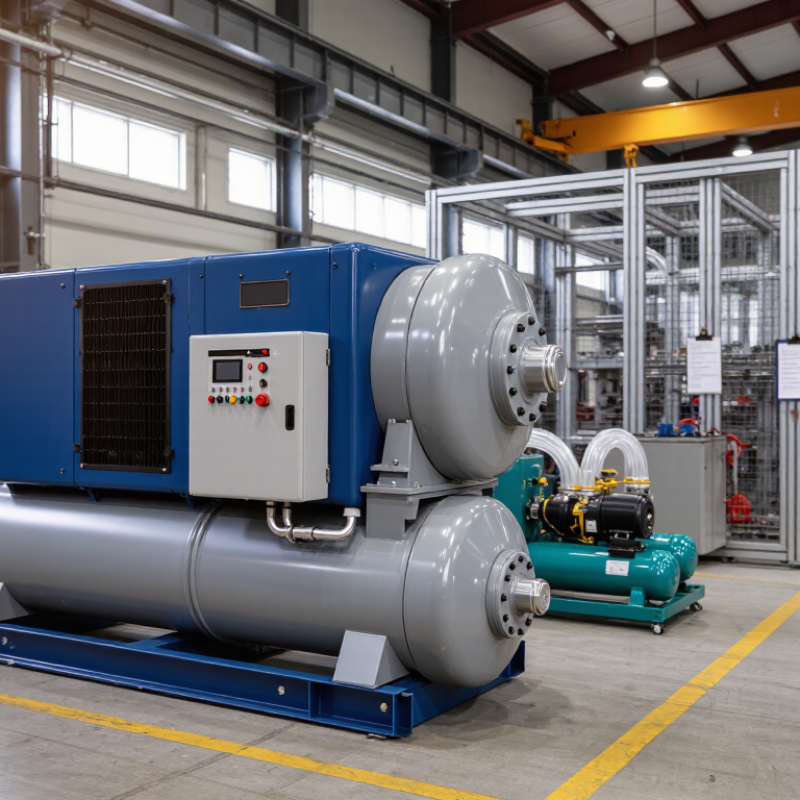
7 Tips for Choosing an Injected Rotary Screw Compressor

Define the Required Airflow, Pressure, and Duty Cycle

Choosing an injected rotary screw compressor begins with numbers, not catalog horsepower. Measure actual airflow at the point of use during peak production, not only during a quiet shift. Record cubic feet per minute or liters per second, and note temperature and altitude. Pneumatic tools often consume more air than their labels suggest. A leak survey may reveal a surprising baseline.

Required pressure means the pressure available at equipment during operation. Check the lowest acceptable pressure, then account for filters, dryers, hoses, and pipe friction. If a machine needs 100 psi at its inlet, setting the compressor to 100 psi is not enough. A practical allowance may be necessary, but excessive pressure wastes energy and can damage equipment. Confirm requirements with equipment documentation and a qualified technician.

Duty cycle describes how long and how often the compressor runs under load. Compare average demand with short peaks, such as a blast cabinet opening or an actuator cycling. A receiver can soften brief surges, but it cannot fix sustained undersizing. For variable shifts, use data logging over several days. I once trusted a single peak reading, which led to an oversized estimate. That mistake was expensive, but useful. Peak demand matters. Recheck the numbers.

Compare Oil-Injection Systems and Air Quality Requirements

Choosing an injected rotary screw compressor starts with the air, not the machine. Oil injection cools the compression chamber, seals internal gaps, and reduces wear. However, small oil carryover can affect instruments, paint finishes, food processes, or medical applications. Define the required air quality before comparing models.

Check the ISO 8573-1 class required at the point of use. Then examine the oil separator, coalescing filters, activated-carbon stages, and dryer performance. A refrigerated dryer may suit general workshop air, while a desiccant dryer is better for low pressure dew points. Do not size treatment equipment only by compressor capacity. Flow peaks, ambient temperature, and pressure loss matter too. They are often missed.

Ask for measured residual oil data, service intervals, separator replacement costs, and pressure-drop figures. Review the compressor’s control range, because frequent unloading can waste energy. Confirm whether the supplied filters match the stated air-quality target. “Low oil” is not the same as oil-free. That distinction matters. In field audits, neglected drains and saturated filters often cause more trouble than the compressor itself. A reliable choice also includes clean installation, routine sampling, and trained maintenance. Yet no selection is perfect; a higher purity target may increase energy use and operating cost. Recheck the process requirements annually, especially after adding new equipment.

7 Tips for Choosing an Injected Rotary Screw Compressor

Compare Oil-Injection Systems and Air Quality Requirements

The chart shows the maximum total oil content permitted by ISO 8573-1 oil-quality classes. Lower values require more effective separation, filtration, condensate management and monitoring when using an oil-injected compressor.

  1. Define the required ISO 8573-1 oil class before selecting the compressor.
  2. Check the separator performance at the intended operating pressure and temperature.
  3. Use appropriately sized coalescing filters for low-oil applications.
  4. Allow for pressure drop and filter replacement when calculating system efficiency.
  5. Specify a dryer and pressure dew point suitable for the production environment.
  6. Provide proper condensate treatment and discharge procedures.
  7. Verify air quality with periodic sampling instead of relying only on nameplate specifications.

Evaluate Motor Efficiency, Capacity Control, and Operating Costs

7 Tips for Choosing an Injected Rotary Screw Compressor

Evaluate Motor Efficiency, Capacity Control, and Operating Costs

Motor efficiency affects every hour of compressor operation. Choose a motor with verified efficiency data, not only an attractive rating. IE3 or IE4 performance can reduce electrical losses, especially during long production shifts. However, efficiency depends on loading, ambient temperature, and maintenance quality. A clean cooler matters.

Capacity control should match your real air demand. Variable-speed control can reduce energy use when demand changes throughout the day. Load-unload control may cost less initially, but frequent cycling can waste compressed air. Ask for performance data at 25%, 50%, 75%, and full capacity. Do not size the compressor for an imagined future.

Operating cost includes electricity, filters, oil, servicing, and unplanned downtime. Request a clear life-cycle estimate based on your local tariff and annual running hours. Measure leakage before selecting extra capacity. Small leaks can sound harmless. They are not.

Check the stated flow using recognized test conditions, such as ISO 1217 requirements. Compare specific power, expressed as kilowatts per unit of delivered air. A lower purchase price may hide higher energy consumption. I have seen buyers focus on the invoice and overlook ten-year electricity costs. That decision deserves a second look. Manufacturers’ figures can also vary with installation conditions, so independent verification remains valuable.

7 Tips for Choosing an Injected Rotary Screw Compressor: Evaluate Motor Efficiency, Capacity Control, and Operating Costs

Tip Evaluation Dimension Practical Data or Benchmark What to Check Why It Matters
1 Match capacity to the real demand profile Select the compressor using the required FAD at operating pressure, not the inlet displacement. A typical plant should be assessed at minimum, average, and peak demand. Record the required airflow in m³/min or CFM and the pressure in bar(g) or psig. Allow only a documented reserve, commonly around 10%–15%, rather than oversizing by default. Oversizing can increase unloaded running, cycling, and energy consumption. Undersizing may cause pressure drops, production interruptions, or excessive operating hours.
2 Evaluate motor efficiency Prefer motors tested to IEC 60034-30-1 efficiency classes. IE3 and IE4 are recognized high-efficiency classes; the actual efficiency depends on motor size, load, speed, and test method. Request the motor efficiency at the expected operating load, plus the motor power factor and rated current. Compare the complete package input power rather than motor efficiency alone. Motor losses become a recurring operating cost over thousands of running hours. Package-level input power also includes the motor, airend, cooling fan, oil system, and controls.
3 Compare capacity-control methods Common methods include load/unload control, modulation, and variable-speed drive control. Variable-speed systems can reduce throttling losses during changing demand, but their usable turndown range is model-dependent. Ask for the manufacturer's performance curve showing power and airflow from minimum stable capacity to full load. Confirm the minimum stable speed, control response, and behavior during frequent starts or demand changes. The best control method depends on the load profile. A variable-speed unit is not automatically the lowest-cost option if the plant operates close to full load continuously.
4 Verify specific power Use specific power = package input kW ÷ delivered airflow. Compare values only at the same pressure, inlet conditions, cooling configuration, and measurement standard. Request a performance table at the intended pressure, such as 7 bar(g), 8 bar(g), or 10 bar(g), with airflow and total package kW. Check whether the quoted value includes auxiliary equipment. Lower specific power generally indicates better energy performance. A small difference becomes significant when the compressor operates continuously or at high annual utilization.
5 Calculate total operating cost Annual electricity cost can be estimated as: input kW × annual operating hours × electricity tariff. Example: 75 kW × 6,000 hours × $0.12/kWh = $54,000 per year at continuous 75 kW input. Use actual operating hours, load percentage, local electricity rates, demand charges, maintenance costs, and consumables. Compare at least a five-year ownership period. Electricity commonly represents the largest lifetime cost of a compressed-air system. Purchase price alone may not identify the most economical solution.
6 Check pressure requirements and pressure losses Many industrial systems operate near 7–10 bar(g), but the correct setpoint depends on the equipment and distribution network. Every unnecessary pressure increase raises energy use. Identify the minimum pressure required at the point of use. Measure losses across filters, dryers, hoses, pipes, and regulators, and avoid selecting a higher pressure solely to compensate for poor distribution. Higher discharge pressure generally requires more power. Correcting leaks and pressure losses can reduce the required compressor setpoint and improve system efficiency.
7 Assess serviceability, air quality, and heat recovery Confirm the required ISO 8573-1 air-quality class, filtration level, dryer pressure dew point, oil-separator service interval, and expected maintenance access. Oil-injected compressors require correct separator, lubricant, and filter maintenance. Review the maintenance schedule, consumable replacement intervals, alarm history, access to service components, condensate handling, and available heat-recovery options. Heat recovery may be useful where hot water or process heat is required. Poor maintenance can increase pressure drop, oil carryover, energy consumption, and downtime. Recovering compressor heat can improve the overall energy value of the installation when there is a suitable heat demand.

Note: Performance values are application benchmarks and should not replace a measured demand profile or a supplier-certified performance test. Compare all compressors under equivalent pressure, airflow, inlet-condition, and package-input-power definitions.

Check Installation Space, Cooling Needs, and Service Accessibility

Choosing an injected rotary screw compressor starts with the room, not the brochure. Measure floor area, doorway width, ceiling height, and maintenance clearance. Leave a clear path around filters, separators, and the oil drain. A cramped installation may fit today, but it makes tomorrow’s service slower and riskier. I once saw a technician remove a cooler through a doorway only after dismantling nearby ductwork. Avoid that mistake.

Cooling needs deserve equal attention. The U.S. Department of Energy reports that compressed air can consume about 10% of industrial electricity. Poor ventilation increases room temperature, oil temperature, and shutdown risk. Provide a short, clean intake route. Keep hot exhaust away from the inlet. Check the manufacturer’s required ambient range, but do not treat it as a guaranteed operating condition.

Dusty factories need more frequent cooler cleaning. CAGI guidance also highlights leak control; DOE estimates leaks can waste 20–30% of compressor output.

Service access is the practical test. Confirm space for oil changes, belt or coupling inspection, drain maintenance, and control-panel access. Check whether a lifting device can reach the main service points. Install isolation valves and readable pressure gauges where operators can reach them safely. Plan condensate management before commissioning. It is easy to overlook. Finally, record temperatures, pressure, and running hours during the first month. The data may challenge your original assumptions, which is useful. A perfect layout is rare. A serviceable one saves time.

Assess Reliability, Safety Features, Warranty, and Supplier Support

Choosing an injected rotary screw compressor requires more than comparing airflow and purchase price. In field inspections, reliability often appears in small details: stable discharge pressure, clean wiring, accessible filters, and recorded service intervals.

Tip 1: Ask for documented duty-cycle testing under conditions resembling your plant. A machine that performs well in a showroom may struggle beside dust, heat, or frequent starts. Review failure data, maintenance procedures, and operator feedback. Vague answers deserve caution.

Tip 2: Examine safety features before discussing discounts. Look for emergency stops, pressure relief protection, guarding, thermal monitoring, and automatic shutdown logic. Confirm that alarms are visible and understandable from the normal operating position. Safety depends on training too. Request manuals, inspection schedules, and commissioning guidance. I would not accept “standard protection” as evidence. Ask what happens after a sensor fails. That answer reveals engineering maturity.

Tip 3: Read warranty terms line by line. Check coverage periods, response times, exclusions, labor responsibilities, and maintenance requirements. Supplier support should include spare-parts availability, remote troubleshooting, and technicians who can reach your site. Get these promises in writing. A long warranty can still disappoint if parts take weeks. I have seen buyers overlook this point. That mistake is expensive. Leave room for uncertainty, because real operating conditions may expose weaknesses that test reports miss.

FAQS

How should I calculate the required airflow?

Measure airflow at the equipment during peak production. Use cubic feet per minute or liters per second. Quiet shifts can mislead you. Record temperature and altitude. Pneumatic tools may consume more air than their labels indicate. Check for leaks before adding compressor capacity.

How much pressure should the compressor provide?

Start with the lowest pressure required at the equipment inlet. Then include losses from filters, dryers, hoses, and piping. A machine needing 100 psi may require a higher compressor setting. Do not add excessive pressure. It wastes energy and may damage equipment. Confirm the final figure with equipment documentation.

What does duty cycle mean?

Duty cycle describes how often the compressor runs under load. Compare average demand with short peaks. Examples include an actuator cycling or a cabinet opening. A receiver can handle brief surges. It cannot correct sustained undersizing. Use several days of data when shifts change.

Is a receiver tank always necessary?

A receiver helps soften short airflow surges. It can reduce frequent compressor starts. However, it cannot repair a compressor that is too small. Size it around real demand patterns. One peak reading may create an oversized estimate. I made that mistake once.

Should I choose variable-speed control?

Variable-speed control suits changing air demand. It may reduce energy use during lighter production periods. Load-unload control can cost less initially. Frequent cycling may still waste compressed air. Ask for performance data at 25%, 50%, 75%, and full capacity. Do not size for an imaginary future.

Which operating costs should I compare?

Compare electricity, filters, oil, servicing, and downtime. Use local electricity rates and annual running hours. Request a life-cycle estimate, not only the purchase price. A cheaper unit may consume more electricity for years. Small leaks matter. They are not harmless.

How can I compare compressor efficiency fairly?

Check verified motor efficiency data and specific power. Specific power shows kilowatts used per unit of delivered air. Compare results under recognized test conditions. Installation temperature and maintenance affect actual performance. Clean coolers are important. Independent verification is still useful.

What installation space does the compressor need?

Measure floor area, doorway width, ceiling height, and service clearance. Leave room around filters, separators, drains, and control panels. Keep a clear route for maintenance tools. A tight room may fit today. It can make tomorrow’s repair slower and riskier. Space is part of reliability.

How should I manage cooling and service access?

Provide a clean intake route and adequate ventilation. Keep hot exhaust away from the air inlet. Dusty factories require more frequent cooler cleaning. Allow access for oil changes and drain maintenance. Install reachable isolation valves and readable pressure gauges. Record temperature, pressure, and running hours during the first month. The data may challenge your assumptions.

Conclusion

Choosing an Injected Rotary Screw Compressor begins with matching the machine to your application. Define the required airflow, operating pressure, and duty cycle so the compressor can meet demand without excessive energy use or unnecessary capacity. Compare oil-injection systems carefully, especially when air quality is important, and determine whether filtration or additional treatment will be needed. Motor efficiency, capacity control, and expected operating costs should also be evaluated, since energy consumption often represents a major part of the total cost of ownership.

Before making a decision, confirm that the compressor fits the available installation space and has suitable cooling and ventilation. Easy access to filters, separators, drains, and other service points can simplify maintenance and reduce downtime. Finally, assess reliability, built-in safety features, warranty coverage, and the supplier’s technical support. A well-chosen compressor should provide stable performance, practical maintenance, and efficient operation throughout its service life.

Liam

Liam

Liam is a dedicated marketing professional with a profound expertise in the industry, where he excels at highlighting the unique advantages of our core products. With a keen understanding of market trends and consumer needs, Liam frequently updates our company’s professional blog, providing......