
Choosing the right Mounted Air Compressor is rarely as simple as comparing horsepower and price. Global buyers must consider installation space, airflow demand, pressure stability, maintenance access, noise, climate, and transport conditions. A unit that performs well in a dry workshop may struggle in a dusty construction yard or a humid coastal plant. Small details matter. For example, an exposed belt guard, undersized wheels, or poor cooling clearance can create expensive problems later.
Frank Moskowitz, a respected compressed-air specialist and longtime industry educator, has said, “Compressed air is often called the fourth utility.” That statement explains why compressor selection deserves careful engineering rather than rushed purchasing. Air supports production lines, vehicle service, packaging equipment, mining tools, and many other applications. When supply becomes unstable, operations can slow within minutes.
This guide reviews the Top 10 Mounted Air Compressors for Global Buyers through a practical lens. It considers portability, tank capacity, motor efficiency, control systems, durability, and service support. It also examines how different models respond to demanding environments and changing workloads. Not every “best” compressor will suit every buyer. That is the uncomfortable truth. A lower purchase price may hide higher energy use, frequent servicing, or difficult spare-parts access. Buyers should verify manufacturer specifications, local electrical requirements, warranty terms, and authorized service coverage before ordering. Some comparisons remain imperfect because field performance depends on installation and operator habits. Still, these factors provide a reliable starting point for making a safer, more informed investment.
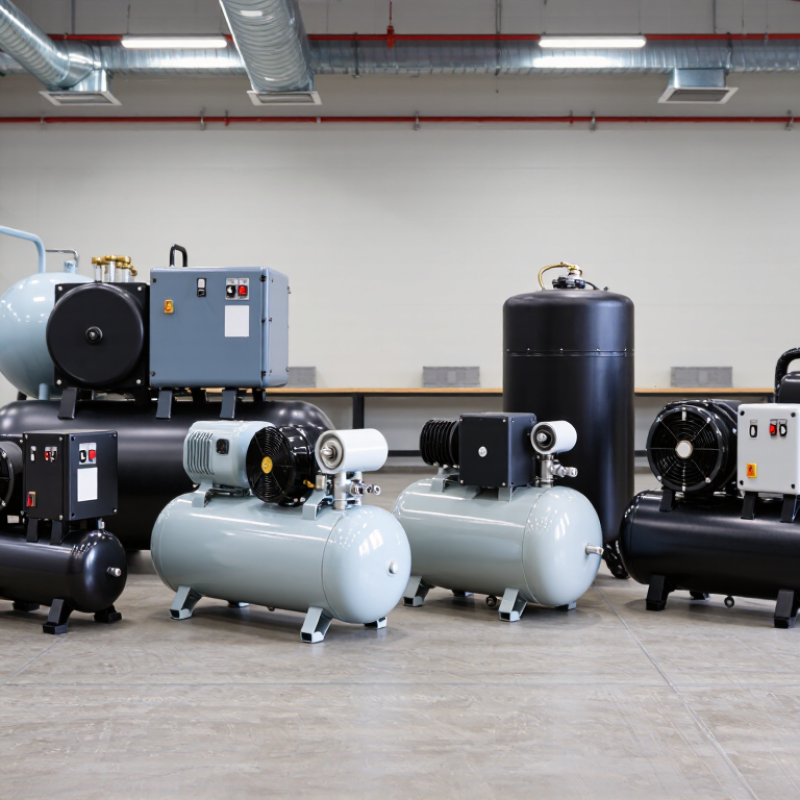
Key features include stable airflow, accessible maintenance panels, automatic protection, and efficient motor control. The U.S. Department of Energy reports that compressed air can consume about 10% of industrial electricity. Its compressed air guidance also identifies leakage as a major loss, often reaching 20–30% of system output. A mounted package with accurate pressure control can reduce unnecessary loading. ISO 1217 supports performance testing, while ISO 8573-1 helps specify air purity. These standards improve comparison, although real-site conditions can still change results. Published efficiency figures are not guarantees.
When evaluating mounted air compressors for global applications, start with the duty cycle, not the advertised horsepower. The U.S. Department of Energy reports that compressed air can consume 10–15% of industrial electricity, and poorly managed systems may waste much more. Compare free air delivery at the required pressure, measured under actual operating conditions. A higher flow rating is not always better.
Climate and transport conditions also shape the choice. Check ambient temperature, humidity, dust exposure, altitude, vibration, and available power. The IEA’s Energy Efficiency 2023 report states that motor-driven systems consume roughly half of global electricity. Efficiency matters. Select a variable-speed configuration when demand changes frequently, but verify its performance at partial load. Confirm enclosure protection, lifting points, skid strength, and service access before purchase. A clean datasheet can still hide costly maintenance problems.
Tips: Request test data based on ISO 1217, and specify air quality under ISO 8573-1. Check voltage, frequency, and local certification requirements. Ask for spare-parts lead times and remote-support coverage. Do not rely on one efficiency figure. Real sites are rarely perfect. A compressor may pass factory tests yet struggle in a hot, dusty workshop. Leave practical margin, but avoid excessive oversizing, which can increase cycling losses and purchase cost.
Mounted air compressors perform best when matched to a clear working environment. The top ten choices serve different needs, from service trucks to fixed production lines. A compact belt-driven unit suits roadside tire work and light repairs. A diesel-powered model handles remote construction sites with uneven electrical access. A high-CFM rotary screw unit supports continuous pneumatic tools. It costs more.
For agriculture, a weather-resistant compressor powers cleaning tools, gates, and small machinery. A quiet oil-free unit fits laboratories, clinics, and food-contact applications. Spray-painting workshops need stable pressure and effective moisture separation. Mining operations require reinforced frames, accessible filters, and dependable cooling. Emergency crews often prefer a generator-mounted compressor for short, demanding tasks. In these cases, fast setup matters more than peak efficiency.
Small reciprocating models remain practical for garages and intermittent use. Large industrial units deliver steadier airflow during long production shifts. Performance should be judged by usable CFM, pressure stability, duty cycle, noise, and service access. A lower-rated compressor may fail when several tools run together. I have seen buyers focus on horsepower and overlook airflow losses through hoses. That mistake is common. Check the mounting surface, vibration control, drain design, and local operating conditions before purchase. Even the best compressor can disappoint when maintenance space is ignored.
Top 10 Mounted Air Compressors for Global Buyers
Comparing Power, Capacity, Portability, and Operating Costs
Choosing among the top ten mounted air compressors requires more than checking horsepower. Power should match the tools, climate, and daily workload. A unit producing 10 CFM may handle light fastening, but continuous blasting needs significantly more capacity. Tank volume affects pressure stability, while recovery speed reveals practical performance. Bigger is not always better. An oversized compressor can consume fuel unnecessarily and add weight to a service vehicle.
Portability depends on mounting space, suspension limits, access points, and terrain. A compact frame may reach narrow construction sites, yet small tanks can cause frequent cycling. Operating costs include fuel, oil, filters, maintenance labor, and downtime. Electric systems may reduce local emissions and noise, but reliable power access remains essential. Buyers should compare rated output under realistic conditions, not only laboratory figures. Specifications can look impressive. Field results may differ.
Tips: Test the compressor with your actual tools before purchasing. Record pressure recovery after repeated use. Inspect drain valves, belt guards, hose connections, and service access. Ask for noise readings and maintenance intervals. Leave room for mistakes. Operators often underestimate winter starting problems, dusty air, and overloaded vehicle mounts. A simple cost sheet can expose hidden expenses over twelve months. Also, avoid choosing the cheapest unit without checking parts availability and technician support in the destination market. Reliability is difficult to measure until the compressor stops.
Comparison of power, air capacity, portability, and estimated annual operating cost
The chart uses normalized scores from 0 to 100. Higher scores indicate greater motor power, higher free air delivery, better portability, and lower operating cost. Reference specifications represent common tank-mounted and skid-mounted industrial configurations. Estimated annual energy cost assumes 2,000 operating hours per year, a 65% average load factor, and electricity priced at US$0.12/kWh. Hover over each bar for the underlying specifications.
Top 10 Mounted Air Compressors for Global Buyers
Safety, maintenance, and compliance should guide every mounted compressor purchase. A compact frame does not guarantee safe installation. Check guarding, emergency stops, pressure relief devices, lifting points, and electrical protection. OSHA limits permissible noise exposure to 90 dBA over an eight-hour shift. Therefore, measure sound levels near operators, not only in brochures. ISO 1217 supports performance testing, while ISO 8573-1 helps define compressed-air purity requirements for sensitive processes.
Maintenance costs can exceed the initial price when access is poor. Inspect filter locations, belt or coupling access, drain systems, and service clearances before ordering. The U.S. Department of Energy reports that compressed-air systems may consume 10–30% of a plant’s electricity. Its compressed-air guidance also identifies leakage as a potential loss of 20–30% of compressor output. These figures make leak detection, pressure control, and correctly sized storage tanks practical purchasing priorities. A powerful unit may still waste energy when it runs unloaded for long periods.
Tips: Request a documented factory test, efficiency curve, noise reading, and spare-parts schedule. Confirm the required voltage, frequency, ambient temperature, altitude, and transport restraints. Compare total cost over five years, not only purchase price. Some specifications remain unclear, and that deserves challenge. Ask for evidence, not promises. Check local certification rules because electrical and pressure-equipment requirements differ between markets. A pre-shipment inspection can reveal loose fittings, poor labeling, or inadequate guards before the compressor reaches the worksite.
| Rank | Typical Mounted Configuration | Nominal Working Pressure | Typical Free Air Delivery | Typical Motor Rating | Typical Receiver Volume | Approximate Footprint | Recommended Duty | Safety and Control Features | Routine Maintenance Guidance | Relevant Compliance Considerations | Purchasing Considerations |
|---|---|---|---|---|---|---|---|---|---|---|---|
| 1 | Compact oil-lubricated reciprocating compressor on a horizontal tank | 8 bar(g) | 0.10–0.25 m³/min | 1.5–3.0 kW | 50–100 L | Approximately 1.0 × 0.5 m | Intermittent workshop tools, small repair stations, and light assembly | Pressure relief valve, non-return valve, thermal overload protection, pressure switch, belt guard, and emergency isolation at the electrical supply | Drain condensate regularly; inspect belts and hoses; replace oil according to the operating-hour schedule; clean the intake filter | Pressure equipment rules may apply to the receiver; electrical construction should match the destination market and supply voltage | Check receiver certification, single- or three-phase power, wheel or skid stability, drain accessibility, and spare-part availability |
| 2 | Vertical-tank reciprocating compressor with integrated dryer-ready outlet | 10 bar(g) | 0.20–0.45 m³/min | 2.2–5.5 kW | 100–200 L | Approximately 0.7 × 0.7 m | General maintenance, garages, fabrication, and pneumatic hand tools | Automatic pressure cut-out, safety valve, motor overload protection, guarded moving parts, vibration-isolating feet, and pressure gauge | Drain the receiver at least daily in humid service; inspect the unloader; check oil level; test the safety valve through an approved procedure | Receiver design and inspection requirements differ by country; use a documented conformity assessment for the complete assembly | Vertical design saves floor space, but confirm ceiling clearance, center of gravity, delivery access, and maximum tool demand |
| 3 | Belt-driven oil-injected rotary screw compressor on a skid | 7.5–10 bar(g) | 0.55–1.20 m³/min | 5.5–11 kW | 200–500 L | Approximately 1.5 × 0.7 m | Continuous workshop, machine tools, packaging, and small production lines | Emergency stop, phase-loss protection, high-temperature shutdown, minimum-pressure valve, separator vessel, and automatic load/unload control | Replace air and oil filters at specified intervals; inspect separator performance; check oil temperature, belt tension, leaks, and condensate drainage | Assess machinery safety, pressure vessel requirements, electrical emissions, grounding, and local energy-efficiency rules | Compare actual FAD at the required pressure, not only motor power; request service-clearance drawings and total cost of ownership |
| 4 | Direct-drive fixed-speed rotary screw compressor with receiver mount | 8–13 bar(g) | 1.0–2.5 m³/min | 11–22 kW | 300–1,000 L | Approximately 2.0 × 0.9 m | Stable industrial demand with long operating periods | Motor protection, temperature and pressure sensors, automatic restart control, emergency stop, relief valve, and high-efficiency cooling fan | Maintain cooler cleanliness; replace filters and separator elements; check oil condition, motor terminals, drains, and controller alarms | Verify conformity with applicable machinery, EMC, low-voltage, pressure-equipment, and workplace-noise requirements | Confirm available voltage and frequency, starting current, ventilation needs, receiver volume, and whether a soft starter is included |
| 5 | Variable-speed-drive rotary screw compressor on a packaged base | 7.5–13 bar(g) | 1.5–4.0 m³/min | 15–37 kW | 500–1,500 L | Approximately 2.2 × 1.1 m | Systems with fluctuating air demand and frequent load changes | Drive overcurrent protection, motor temperature monitoring, pressure transducer, emergency stop, controlled ramp-up, and automatic fault shutdown | Inspect inverter cooling paths; maintain filters, oil, separator, and cooler; review operating data and verify pressure-sensor accuracy | Variable-speed drives require attention to EMC, harmonic current, grounding, and local electrical installation rules | Compare turndown range, specific power in kW per m³/min, minimum stable flow, warranty conditions, and drive replacement support |
| 6 | Oil-free scroll compressor package with receiver mounting | 7–10 bar(g) | 0.20–0.90 m³/min | 3.7–15 kW | 100–500 L | Approximately 1.2 × 0.8 m | Laboratories, dental facilities, electronics, and applications requiring clean air | Thermal protection, pressure relief, non-return valve, duty/standby sequencing, high-temperature alarm, and acoustic enclosure | Replace intake filters; inspect scroll tip seals and cooling fans; test dew point where a dryer is installed; maintain clean ventilation paths | Specify air purity using ISO 8573-1 classes; oil-free construction does not automatically guarantee particle, water, or microbial control | Define required air-quality class, redundancy, noise limit, dryer type, receiver hygiene requirements, and validation documentation |
| 7 | Oil-free reciprocating compressor on a compact skid | 8 bar(g) | 0.08–0.35 m³/min | 1.1–5.5 kW | 24–200 L | Approximately 0.9 × 0.6 m | Clean instrument air, sampling equipment, small laboratories, and intermittent service | Pressure switch, relief valve, thermal overload, guarded crank mechanism, vibration isolators, and automatic condensate management where fitted | Check piston rings and valves; replace intake filters; inspect vibration mounts; keep the cooling area clear and test the pressure switch | Use ISO 8573-1 terminology for air quality; confirm receiver compliance and electrical safety requirements for the installation country | Oil-free models may have higher sound and wear characteristics; evaluate duty cycle, service-kit cost, and required acoustic treatment |
| 8 | Two-stage reciprocating compressor on a heavy-duty receiver | 10–15 bar(g) | 0.35–1.00 m³/min | 5.5–15 kW | 300–1,000 L | Approximately 1.8 × 0.9 m | High-pressure workshop tools, blow-off, service centers, and moderate-duty production | Interstage safety protection, final-stage relief valve, aftercooler, motor overload protection, pressure switch, and belt guard | Drain condensate frequently; inspect interstage and discharge temperatures; replace oil and filters; check belts, valves, and receiver corrosion | High-pressure receivers require careful inspection, relief-device sizing, labeling, and records in many jurisdictions | Confirm maximum allowable working pressure, pressure-test documentation, transport weight, foundation loading, and local inspection requirements |
| 9 | Low-pressure oil-injected screw compressor on a skid | 3–5 bar(g) | 3.0–10.0 m³/min | 22–75 kW | 500–2,000 L | Approximately 2.5 × 1.3 m | Aeration, wastewater equipment, pneumatic conveying, and low-pressure process air | Low-pressure shutdown, high-temperature protection, separator vessel, emergency stop, pressure relief, and automatic sequencing | Clean the air-oil cooler; monitor separator differential pressure; maintain oil, filters, drains, and motor cooling; check for leaks | Confirm process-air cleanliness, environmental noise limits, pressure-vessel rules, and energy-performance documentation | Low-pressure units should be compared by delivered flow and specific power at the actual operating pressure to avoid oversizing |
| 10 | Containerized or weather-protected mounted compressor package | 7–13 bar(g) | 4.0–15.0 m³/min | 30–110 kW | 1,000–5,000 L | Approximately 3.0 × 1.5 m or larger | Remote sites, construction support, utilities, and outdoor industrial installations | Emergency stop, fire-risk controls, ventilation monitoring, high-temperature shutdown, anti-condensation heater, relief valve, and lockable isolator | Inspect enclosure ventilation, filters, drains, cables, lifting points, corrosion protection, oil leaks, and alarm history; follow a documented service plan | Outdoor placement may require IP rating, EMC assessment, grounding, lifting certification, noise control, and regional pressure-equipment compliance | Confirm ambient-temperature range, altitude derating, weatherproofing, lifting and transport dimensions, fuel or electrical infrastructure, and remote monitoring |
Note: The values shown are representative purchasing ranges for common mounted compressor configurations, not manufacturer-specific model specifications. Free air delivery should be verified according to ISO 1217 or the applicable test method at the required inlet conditions and discharge pressure. Receiver, electrical, machinery-safety, noise, and air-quality requirements vary by destination country and installation environment.
Match the compressor to the site, tools, airflow demand, and operating schedule. A garage needs less capacity than a continuous production line.
A compact belt-driven or reciprocating compressor works well for tires and intermittent repairs. It is practical, but not ideal for several tools running together.
A diesel-powered unit suits locations with unreliable electrical access. Confirm transport restraints, lifting points, ventilation, and uneven ground conditions.
Compare usable CFM with the combined demand of every connected tool. Do not rely on horsepower alone. Hose losses can reduce actual airflow.
Choose stable airflow, suitable duty cycle, accessible filters, effective cooling, and enough receiver storage. A rotary screw design may cost more but support longer operation.
Measure sound near operators, not only in product documents. Add distance, barriers, or hearing protection when needed. Noise matters.
Check filter access, belt or coupling clearance, drain design, vibration control, and service space. A small frame can hide difficult maintenance.
Find leaks, control pressure, and avoid long unloaded running periods. Correctly sized storage tanks may improve system efficiency. Some savings estimates remain uncertain.
Request factory-test records, efficiency curves, noise readings, spare-parts schedules, and operating limits. Ask for evidence, not promises.
Verify guards, emergency stops, pressure relief devices, electrical protection, and lifting points. Confirm local certification requirements before installation. The details can be easy to miss.
A Mounted Air Compressor is a practical compressed-air solution designed for stable installation, efficient operation, and easy integration into workshops, factories, service vehicles, and construction environments. This guide explains its main features, including air pressure, flow rate, motor power, tank capacity, mounting design, noise level, and energy efficiency. It also outlines how global buyers can evaluate equipment according to climate, workload, available power, transportation needs, and local operating conditions.
The article presents ten types of Mounted Air Compressor systems selected for different performance requirements and applications, from compact intermittent-use models to high-capacity units for continuous industrial work. It compares power, capacity, portability, maintenance demands, and total operating costs to support practical purchasing decisions. In addition, readers will learn about safety protections, routine servicing, spare-part availability, documentation, certification, and compliance with applicable regional standards. This balanced approach helps buyers choose reliable equipment that delivers consistent performance, manageable costs, and long-term value.
