
Why choose a Portable Diesel Air Compressor when electric power is unavailable or unreliable? The answer begins at the jobsite. Remote road construction, quarry drilling, bridge repair, and emergency maintenance often demand compressed air far from a dependable electrical outlet. A diesel-powered unit arrives ready to work. It can power pneumatic breakers, rock drills, sanders, and cleaning tools across uneven ground.
Ron Marshall, a respected compressed-air systems specialist, has warned, “Compressed air is one of the most expensive forms of energy available.” His observation deserves attention. A compressor may seem simple, yet fuel use, pressure settings, air leaks, and idle time can quickly affect operating costs. Choosing the correct capacity matters. An oversized machine wastes fuel. An undersized machine struggles under constant demand.
Portability is the practical advantage. Many models include towable frames, lifting points, weather-resistant enclosures, and receivers built for demanding environments. Picture a crew beside a dusty trench, using long air hoses without searching for a power connection. That flexibility saves setup time. It also supports work continuity when conditions change.
Still, diesel power is not automatically the perfect answer. Fuel storage, engine servicing, exhaust management, noise, and local environmental requirements need careful review. That is where experience matters. Operators should compare cubic feet per minute, working pressure, fuel consumption, service access, and total ownership cost. A Portable Diesel Air Compressor becomes valuable when its mobility matches the work. It should support productivity, not merely add more equipment to the site.
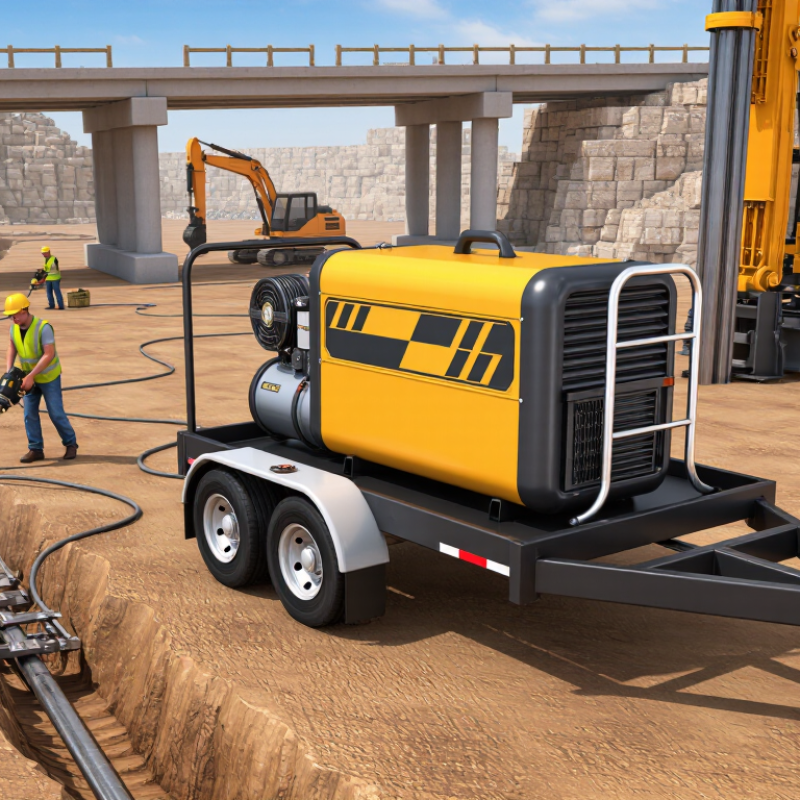
A portable diesel air compressor is a mobile machine that produces pressurized air without relying on grid electricity. A diesel engine drives an airend, usually a rotary screw compressor. The package also includes a fuel tank, cooling system, air filters, controls, and a towable or skid-mounted frame. It can supply pneumatic tools at construction sites, road projects, quarries, and remote maintenance areas.
The word portable can mislead. These machines are movable, but many weigh several tonnes. Site access, ground strength, ventilation, and lifting points require careful checks. In field use, operators typically connect air hoses, inspect oil and fuel levels, then verify pressure and flow before loading tools. ISO 1217 provides established methods for testing compressor performance, including delivered air volume and power input. These measurements matter more than advertised pressure alone.
Fuel efficiency also deserves attention. The U.S. Department of Energy’s Improving Compressed Air System Performance sourcebook reports that compressed air can consume 10–15% of industrial electricity. A diesel unit does not use that electricity directly, but fuel still represents a major operating cost. Poorly sized hoses, dirty filters, and air leaks waste output. The U.S. DOE also notes that leaks may waste 20–30% of compressor capacity in unmanaged systems. That figure is sobering. Portable equipment is useful, yet it is not automatically efficient. Actual performance depends on maintenance, duty cycle, ambient temperature, and operator decisions.
| Dimension | Typical Information | Why It Matters |
|---|---|---|
| What it is | A mobile air compressor powered by a diesel engine. It draws in air, compresses it, and delivers pressurized air through an outlet. | It provides compressed air where a fixed compressor or reliable electrical supply may not be available. |
| Portability | Models may be mounted on a towable trailer, a vehicle, or a portable skid. The exact configuration and transport requirements vary by model. | Choose a setup suited to the site, access routes, towing capacity, and how often the compressor must be moved. |
| Airflow capacity | Commercial portable units are available across a broad range, from under 200 to well over 1,000 cubic feet per minute (CFM). | Match the compressor’s delivered airflow to the combined demand of the tools or equipment being operated. Check the rated airflow at the required pressure. |
| Operating pressure | Many construction and industrial models are designed for pressures around 100 psi, while specialized models can be configured for higher pressures. | Tools and processes have specific pressure requirements. Airflow and pressure ratings should be checked together rather than considered separately. |
| Power source | A diesel engine drives the compressor and does not require a mains electrical connection for compression. | This can be useful at remote worksites, subject to fuel availability, ventilation, emissions rules, and safe operating practices. |
| Common applications | Examples include pneumatic tools, sandblasting, construction work, pipeline maintenance, and supplying air to other compatible equipment. | Confirm that the compressor’s airflow, pressure, air quality, and duty rating suit the intended application. |
| Fuel and runtime | Fuel consumption and runtime depend on engine size, compressor load, fuel-tank capacity, and operating conditions. | Estimate fuel needs for the planned work period and allow for refueling, servicing, and changing site conditions. |
| Noise and emissions | Diesel engines produce exhaust emissions and operating noise. Levels vary by equipment design and workload. | Check local emissions requirements and site noise limits. Use appropriate ventilation and keep exhaust away from occupied or enclosed areas. |
| Maintenance | Routine service commonly includes engine oil, filters, cooling-system checks, and inspection of compressor components, following the operator’s manual. | Regular maintenance supports reliable operation and helps identify wear or leaks before they interrupt work. |
| Key selection checks | Compare required CFM and pressure, duty cycle, mobility, dimensions, weight, fuel capacity, noise, emissions compliance, and service access. | These checks help ensure the unit fits both the work and the site’s transport, operating, and regulatory conditions. |
| Figures and configurations are general industry information, not specifications for a particular machine. Always verify performance, safety instructions, and applicable regulations in the equipment documentation. | ||
It supplies compressed air without a permanent grid connection. Crews can operate breakers, drills, and impact tools while relocating.
It reduces long extension cables, temporary boards, and trip hazards. Less wiring can simplify a busy construction area.
Check each tool’s required pressure and airflow. Add a practical reserve for demand peaks, but avoid excessive capacity.
Not always. An oversized unit may waste fuel, while an undersized unit can overheat and slow drilling.
Long, narrow hoses can reduce pressure at the tool. Match hose diameter and length to the working distance.
Dusty ground requires accessible filters and clear maintenance instructions. A low air intake may pull in dust and increase repairs.
Inspect hoses, drain moisture, check gauges, and follow the pre-start checklist. Small omissions can create serious delays.
No. It offers mobility, but fuel storage adds weight and responsibility. Noise may also disturb nearby workers.
Confirm airflow, operating pressure, fuel use, service intervals, lifting points, footprint, and noise data. Brochure figures may differ onsite.
Match compressor output to actual tool demand. Avoid idling during long pauses and consider altitude, temperature, and maintenance.
A Portable Diesel Air Compressor is a mobile machine that uses a diesel engine to generate compressed air for tools and equipment. Its compact, towable design allows it to operate independently of fixed power sources, making it especially useful in remote or temporary workplaces. The engine drives an air-end component, which compresses and stores air before delivering it through an outlet for continuous or intermittent use. This setup provides flexibility where electricity may be limited or unavailable.
Its portability supports construction, road maintenance, mining, agriculture, emergency repairs, and other outdoor operations that require reliable airflow. When choosing a Portable Diesel Air Compressor, buyers should consider air pressure and flow requirements, fuel efficiency, tank capacity, noise levels, operating environment, maintenance accessibility, safety features, transport requirements, and overall durability. Selecting the right configuration helps improve productivity, reduce downtime, and ensure the compressor can meet changing job-site demands.
