Explore our high-performance heavy industrial screw air compressors, optimized for energy-saving, stable continuous duty, and smart system control.
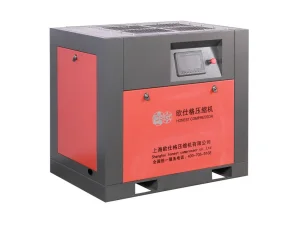
In the modern manufacturing era, compressed air is often referred to as the "fourth utility" after electricity, water, and gas. As global industries strive toward carbon neutrality, the demands on compressed air delivery systems have shifted from basic volume output to high-grade energy efficiency, intelligent pressure stabilization, and integrated space-saving architectures. Traditional industrial setups require complex configurations consisting of separate screw compressors, external air receivers, high-capacity desiccant or refrigerant dryers, and multiple line filters. This modular setup introduces massive installation overheads, potential pressure drops at piping junctions, and footprints that modern space-optimized facilities cannot afford.
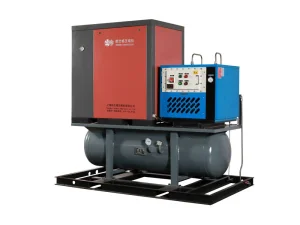
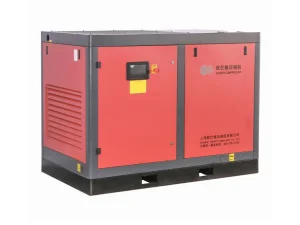
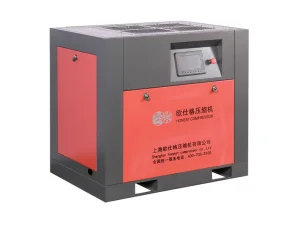
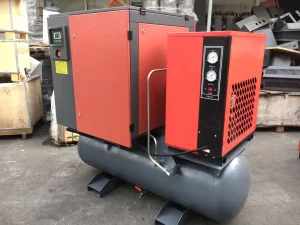
The arrival of the Integrated Screw Air Compressor (also commonly referred to as the 4-in-1 or all-in-one smart station) marks a monumental design change. By housing the high-efficiency rotary screw host, permanent magnet motor, air receiver tank, refrigerated air dryer, and multi-stage particulate filters in a single structural cabinet, manufacturers provide a plug-and-play machine. Over the past five years, sectors such as automated electronics assembly, precision laser cutting, pharmaceutical packaging, and heavy metal fabrication have adopted integrated configurations. This transition has drastically decreased pressure drops (often saving up to 0.1-0.2 bar of line resistance), cut onsite commission times by 85%, and eliminated field piping installation failures entirely.
Under international efficiency updates like ISO 1217 Annex C/E and European Ecodesign directives, industrial plants are heavily incentivized to swap old, low-efficiency rotary compressors for modern variable speed permanent magnet platforms, reducing facility energy draws by 20% to 50% under fluctuating loads.
To understand the superiority of integrated systems, we must analyze the thermodynamic and mechanical components of contemporary compressor engineering. The core technology centers around two breakthroughs: Permanent Magnet Variable Speed Drive (PM VSD) and Two-Stage Direct Drive Compression.
Standard fixed-speed asynchronous induction motors operate inefficiently at partial loads, continuously cycling between loaded and unloaded modes. Unload operations waste up to 30% of the motor’s rated power without producing any useful air pressure. Conversely, PM VSD motors utilize highly coercive rare-earth permanent magnets (typically NdFeB, capable of maintaining magnetic stability at temperatures exceeding 150°C). Controlled by high-frequency vector inverters, these motors match their rotational speed dynamically to actual flow consumption. This eliminates mechanical unload cycles and keeps specific power consumption (kW/m³/min) at optimal levels across a 15% to 100% load spectrum.
Reduces the pressure ratio per stage, diminishing internal back-leakage, and enhancing volumetric efficiency close to isothermal compression limits.
Eliminates high-wear components like pulleys, belts, and gears. Delivers 100% mechanical transmission efficiency with virtually zero maintenance requirements.
Features dry-type twin rotors with specialized high-temperature polymer seal coats, ensuring ISO 8573-1 Class 0 oil-free air for contamination-sensitive facilities.
The competitive edge of China’s advanced manufacturing sector is no longer defined merely by raw output capacity; it is defined by supply chain integration, digital quality management, and technological speed. Shanghai Honest Compressor Co., Ltd. stands as a clear example of this operational paradigm. Established in early 2004, the company operates as a British-owned manufacturing powerhouse situated at NO. 355 Jiajian Branch Road, Malu Town, Jiading District, Shanghai, China.
This unique lineage merges British engineering standards (rigorous safety factors, advanced thermodynamic tolerances, robust materials selection) with Shanghai’s unmatched high-technology supply chain. With access to specialized steel casting, CNC automated rotor milling machinery, and specialized PM motor production within a 100-kilometer radius, Shanghai Honest Compressor Co., Ltd. rapidly implements technological upgrades.
Furthermore, our quality control conforms to the ISO 9001:2015 quality management standard. Each machine undergoes full load testing at the National Compressor Inspection Center before dispatch, ensuring that actual power consumption, free air delivery (FAD), and vibration levels exceed national energy-saving standards.
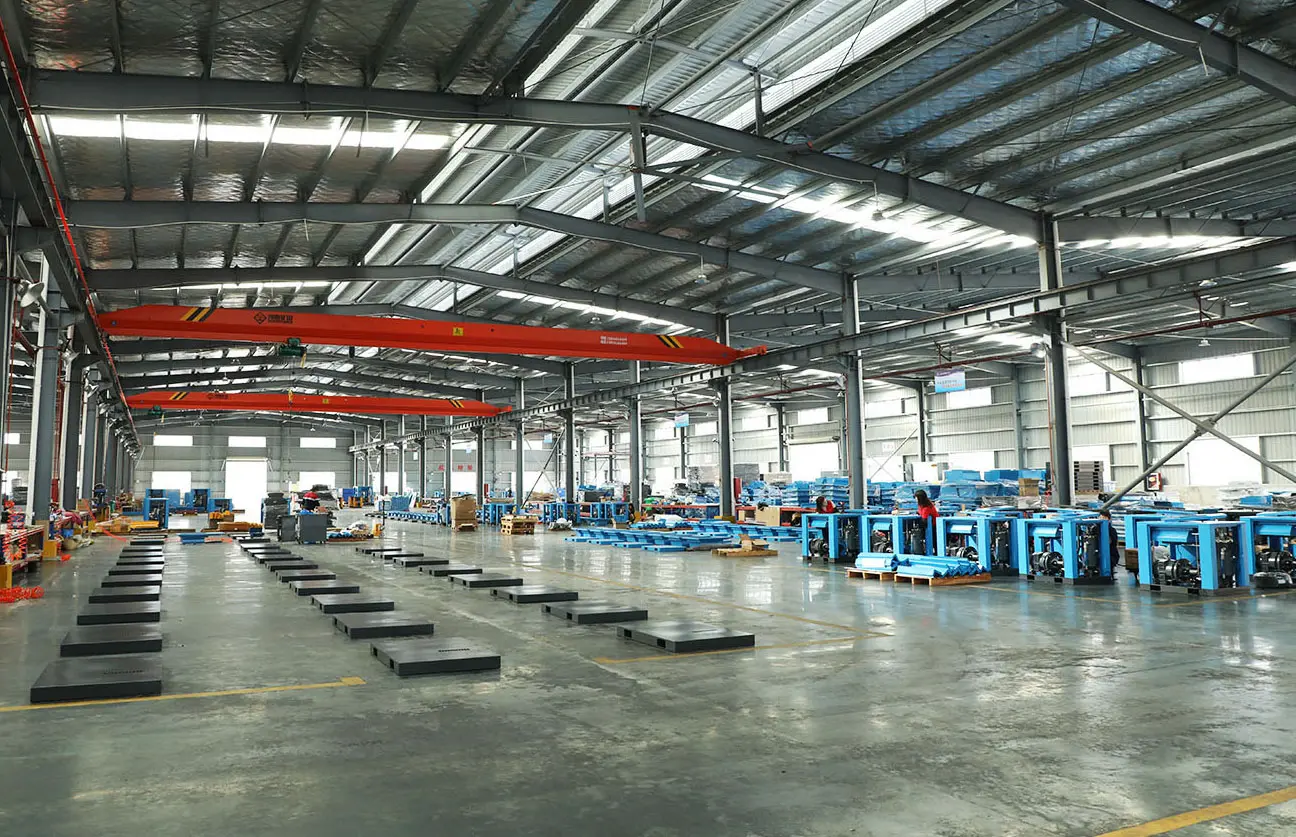
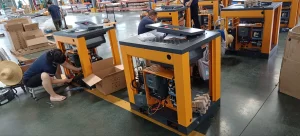
Operating from a modern production facility in Jiading District, Shanghai, we specialize in high-capacity twin-screw compressors and comprehensive downstream system engineering. Our product portfolio spans from 3kW to 480kW systems, including piston gas installations, ceramic membrane filtration units, desiccant dryers, and specialized gas separation machinery.
Corporate Hotline: 400-705-9168
Different industries present varied demands for air quality and operating pressures. Standard off-the-shelf compressors often fail to deliver optimal efficiency because they are not tailored to specific industrial workflows. Below are the key applications where specialized integrated compressors prove critical:
High-Precision Fiber Laser Cutting (15.5 Bar Systems): Laser cutting processes rely heavily on auxiliary gas to blow away molten metal. Any trace of oil or moisture in the air will contaminate the expensive laser focusing lens, causing thermal fracturing and downtime. Our ODM 15.5 bar special pressure screw air compressors are engineered specifically for laser systems, delivering clean, dry, oil-free high-pressure air that stabilizes cutting speed and ensures clean, burr-free edges.
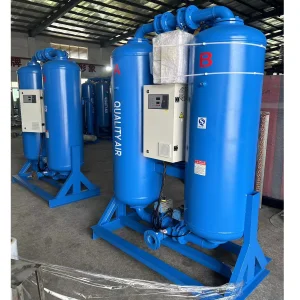
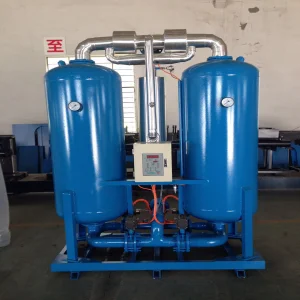
Electronics and Semiconductor Cleanrooms: Electronic manufacturing requires ultra-low dew points and zero particulate contamination. Through integrated micro-heat regeneration desiccant dryers, our systems achieve pressure dew points (PDP) as low as -40°C to -70°C, preventing static electricity buildup and protecting wafer manufacturing from micro-condensation.
Explosion-Proof All-in-One Stations for Mining and Oil/Gas: Underground mines and petrochemical processing plants present explosive dust and gas threats. Our specialized explosion-proof 4-in-1 stations are equipped with flame-retardant cabinets, ATEX/IECEx certified electric enclosures, and spark-free drive mechanisms, assuring safe continuous operations in hazardous environments.
When purchasing compressed air machinery, procurement managers often make the mistake of prioritizing the initial purchasing cost (CAPEX). In reality, the purchase price represents only about 10% to 15% of the compressor's Total Cost of Ownership over a 10-year service life. Energy consumption constitutes a massive 70% to 75% of the TCO, while standard maintenance, consumables, and parts account for the remaining 10% to 15%.
By opting for an integrated PM VSD unit, the slight premium paid at purchase is recovered within the first 12 to 18 months of operation. When sourcing from China, procurement agents must evaluate five key technical parameters to ensure long-term reliability:
A fixed-speed compressor operates on a "load/unload" cycle. When air demand drops, the motor continues running at full speed but vents internal pressure, consuming 30% to 40% of its rated power without producing compressed air. A Permanent Magnet Variable Speed Drive (PM VSD) compressor uses a high-efficiency controller to adjust the motor's rotational speed, directly matching actual air demand. This eliminates unload cycles, maintains steady system pressure to within 0.1 bar, and reduces power consumption by 30% to 50% under variable workloads.
Laser cutting demands high auxiliary air pressure to blow away molten metal instantly during the cutting process. Standard 7-10 bar compressors cannot provide sufficient velocity, resulting in slag formation and rough cut edges, particularly on thick carbon steel or aluminum plates. Operating at 15.5 bar ensures clean cuts and high-speed processing. Additionally, the integrated air dryer and multi-stage filtration remove all moisture and oil aerosols, preventing contamination of expensive laser mirrors and focusing lenses.
Heatless desiccant dryers utilize around 15% to 20% of the dried air to purge and regenerate saturated desiccant beads, representing a significant waste of compressed air. Micro-heat regeneration dryers, however, incorporate an internal heating element that warms the purge air before it passes through the desiccant bed. This heat increases the moisture absorption capacity of the purge air, reducing the dry air loss to only 3% to 5%, thereby generating substantial long-term energy savings.
In a single-stage compressor, compressing air from atmospheric pressure up to 8 or 10 bar in one step creates a high compression ratio. This ratio increases internal air leakage back across the rotor clearances and generates significant heat, which decreases air density. Two-stage compression divides this ratio across two separate rotor sets. The air is compressed to an intermediate pressure, cooled via interstage oil injection, and then compressed to the final pressure in the second stage. This keeps the process close to efficient isothermal compression, reducing power requirements by 10% to 15% compared to single-stage units of the same capacity.
All air equipment must comply with strict industrial manufacturing standards. These include ISO 9001:2015 for quality management, CE mark compliance for the European Union market, and ASME code certifications for pressure vessels (such as the air receiver tank) for the North American market. Shanghai Honest Compressor Co., Ltd. ensures all pressure systems are fully certified, documented, and tested to meet these international import standards.
Enhance your industrial line with our integrated desiccant dry packages, high-pressure cutting series, and multi-stage compression configurations.
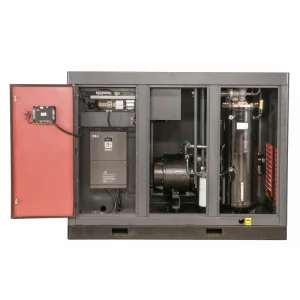
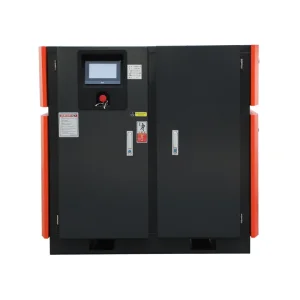
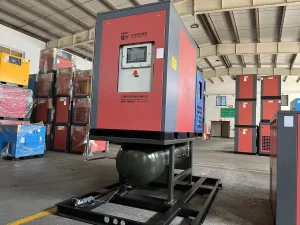
A mathematical overview of our operational capabilities, material tolerances, and system efficiencies verified by industrial quality standards.