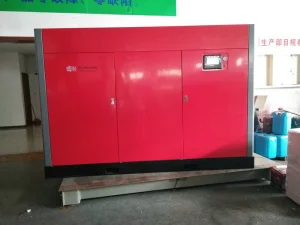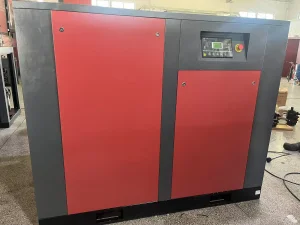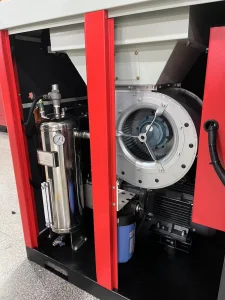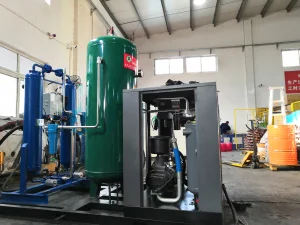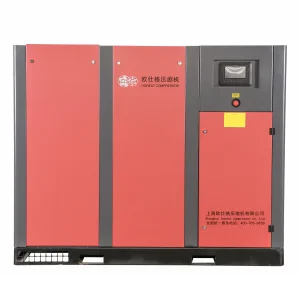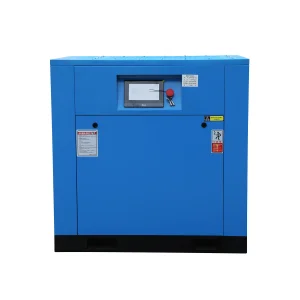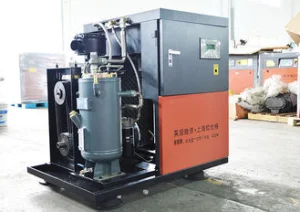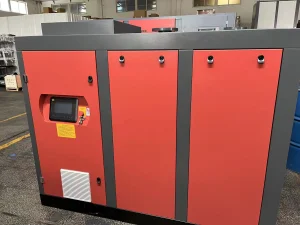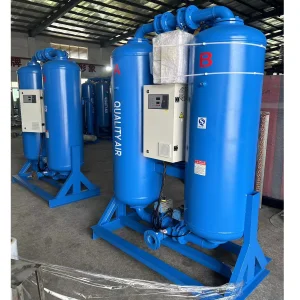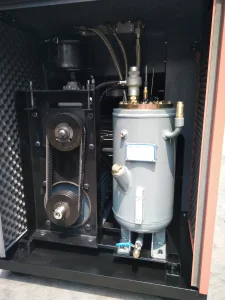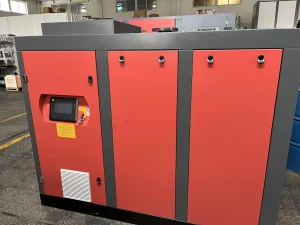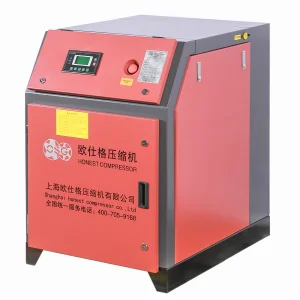
High-pressure, oil-free, and energy-saving configurations engineered to match continuous laser cutting specifications.
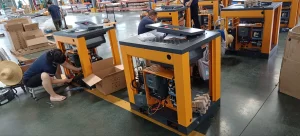
How high-pressure dry compressed air is replacing costly Nitrogen and Oxygen across global manufacturing industries.
In high-power fiber laser cutting operations, the choice of assist gas has historically been a binary compromise between performance and operating expense (OPEX). Traditionally, Liquid Nitrogen (N2) was relied upon to achieve dross-free, unoxidized edge profiles on stainless steel and aluminum, while Oxygen (O2) was used to cut carbon steel. However, the recurring cost of bulk gas rental, distribution infrastructure, and volatile delivery rates can swallow up to 50% to 60% of a laser shop’s total operational cost.
Today, with the rise of ultra-high-power fiber lasers (ranging from 6kW to over 40kW), high-pressure dry compressed air has emerged as the definitive modern alternative. Operating at pressures between 16 and 30 bar, compressed air acts as a highly efficient kinetic ejector and thermal modulator. The 78% nitrogen composition within air behaves similarly to pure nitrogen as an inert shielding agent, while the 21% oxygen provides an auxiliary exothermic reaction that increases cutting speeds by up to 20-30% on specific plate thicknesses.
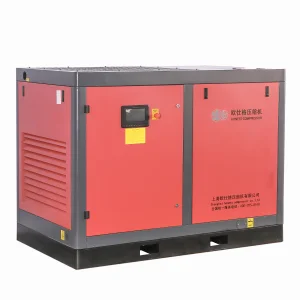
From an engineering perspective, laser cutting works by focusing electromagnetic energy to melt a precise kerf line in sheet metal. The assist gas must immediately blow the molten metal out of the cut zone. If the pressure is too low, slag (dross) adheres to the bottom of the cut, requiring labor-intensive secondary finishing. By engineering specialized VSD PM double-stage screw compressors designed to run reliably at high pressure, we allow manufacturers to produce their own assist gas on-demand at a fraction of the cost of tank-delivered gases.
By compressing ambient air in-house, the direct electricity costs of running a specialized PM VSD compressor offset gas cylinder or dewar replenishment logistics, achieving payback within 6 to 12 months.
The trace oxygen content in dry compressed air creates a controlled exothermic reaction that enables the laser head to feed faster through medium-thickness mild steels and aluminum.
Replacing liquid nitrogen deliveries removes heavy transport logistics and energy-intensive cryogenic liquid production processes, aligning operations with modern corporate ESG targets.
Why laser optics demand ISO 8573-1 Class 1-2-1 air purity to prevent catastrophic lens damage.
A major risk of utilizing compressed air for laser cutting is contamination. High-power fiber laser lenses are highly sensitive optical assemblies. The slightest trace of liquid water or aerosolized compressor oil can deposit onto protective windows, causing thermal lensing, beam aberration, or catastrophic failure of the cutting head itself.
To mitigate this risk, Shanghai Honest Compressor Co., Ltd. configures all OEM systems to satisfy or exceed ISO 8573-1:2010 Air Quality Class 1-2-1 standards:
| Gas Assist Type | Operational Cost Profile | Cutting Edge Quality | Optimal Material Thickness | Laser Head Safety Risk |
|---|---|---|---|---|
| Liquid Nitrogen (Dewar/Bulk) | Extremely High (Continuous replenishment & rental fees) | Excellent (Perfect oxide-free bright edge) | 0.5mm – 25mm (All ranges) | Low (Pure inert gas feed) |
| Bulk Oxygen (O2) | Moderate (High consumption on thick carbon steel) | Oxidized (Requires cleaning before welding/painting) | Carbon Steel > 6mm | Low |
| High-Pressure Dry Air (16 Bar) | Very Low (Only local power consumption) | Very Good (Slight oxidation, minimal dross) | Aluminum/Stainless < 6mm, Mild Steel < 8mm | Medium (Requires high-grade filtration) |
| High-Pressure Dry Air (25-30 Bar) | Lowest (Highly efficient at scale) | Excellent (Comparable to N2 with faster feed rates) | Aluminum/Stainless < 12mm, Carbon Steel < 16mm | Low (When paired with ISO Class 1-2-1 filtration) |
A Premier British-Owned Twin-Screw Engineering Enterprise in China
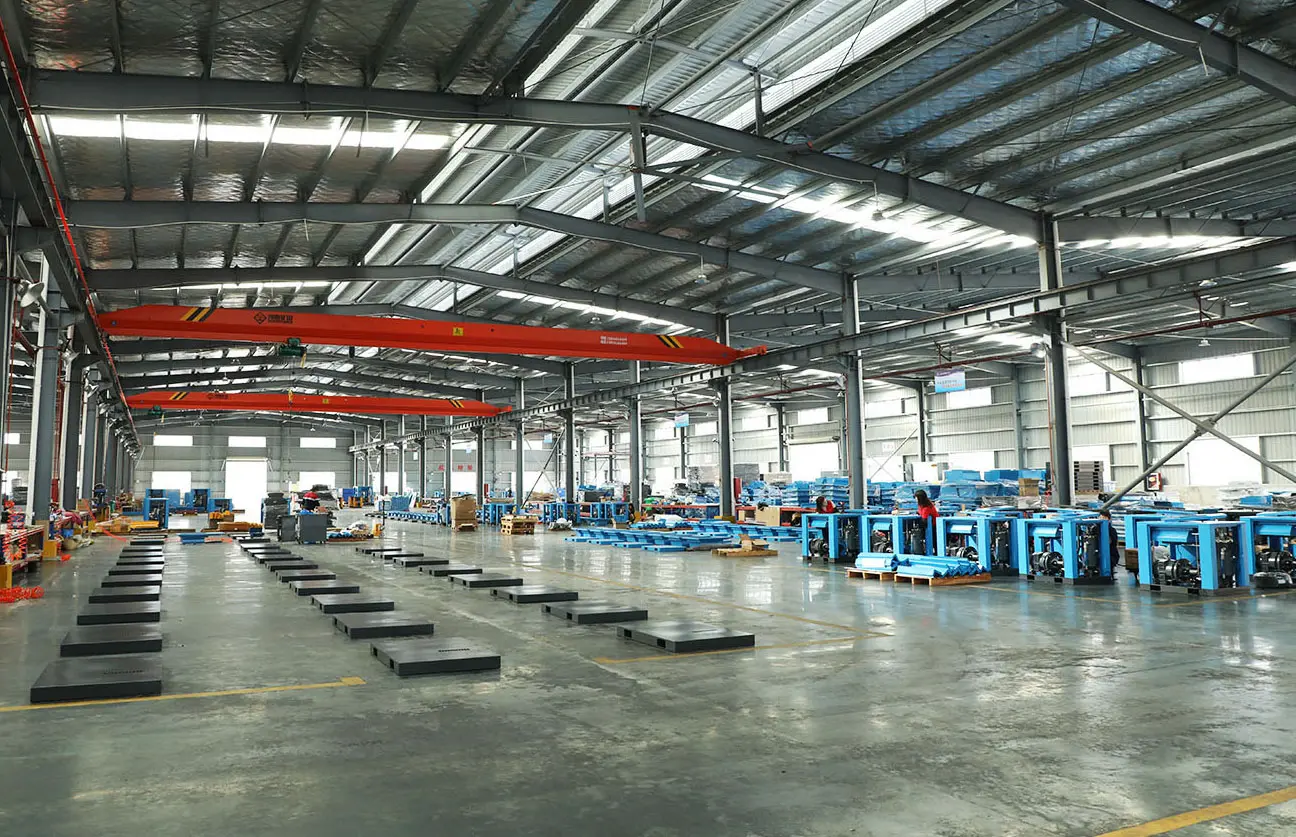
Shanghai Honest Compressor Co., Ltd. is a British-owned enterprise founded in early 2004. Our primary manufacturing facility is located at NO. 355 Jiajian Branch Road, Malu Town, Jiading District, Shanghai, China. We have evolved into a large-scale manufacturing enterprise specializing in the production of twin-screw air compressors in China. Simultaneously, we serve as an essential provider of high-pressure air system solutions to industries worldwide.
We provide a comprehensive portfolio of piston air compressors (low pressure, medium pressure, high pressure, oil-free designs), screw air compressor systems (ranging from 3kW to 480kW, gas separation equipment, refrigerant compressors, cold dryers, ceramic membrane filtration systems), and all corresponding consumables. Our operations adhere strictly to the ISO9001:2015 quality management system, monitoring quality and environmental footprints at every assembly phase.
Designed with maintenance access and high energy efficiency in mind, our equipment consistently outperforms national energy conservation benchmarks under testing by the National Compressor Inspection Center. We also configure and host complete station engineering plans, user training, and mechanical overhauls to provide turnkey solutions.
Where laser assist gas technology is heading over the next decade.
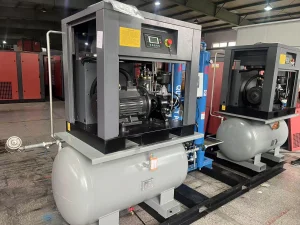
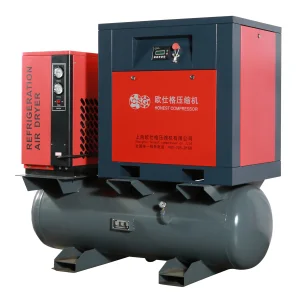
In response to global procurement trends, our technical roadmap prioritizes integrated configurations. High-power laser operators prefer space-saving, pre-plumbed "Four-in-One" solutions: a permanent magnet variable frequency screw compressor, a precision air receiver tank, an integrated refrigeration/desiccant dryer system, and multi-stage coalescing filters mounted on a single structural skid. This configuration eliminates onsite plumbing pressure drops and minimizes potential installation errors, lowering installation costs for end-users.
Laser cutting demands vary significantly based on material thickness, shape, and nesting efficiency. A fixed-speed air compressor wastefully vents air during loading/unloading cycles. Our variable speed drive PM motors match volumetric output directly with the real-time consumption rates of the laser nozzle. By adapting motor speeds dynamically, operators can lower overall energy bills by 30% to 45% compared to traditional systems.
As 20kW, 30kW, and 40kW fiber lasers become the standard in sheet metal processing, assisting pressures must scale. High-velocity cutting of 12mm stainless steel requires up to 30 bar to guarantee clean kerfs and dross-free finishes. Our technical roadmap focuses on dual-stage compression air-ends that deliver elevated pressures without increasing heat-induced rotor wear, assuring uninterrupted performance in continuous manufacturing environments.
Building reliability into procurement chains across Europe, North America, and Southeast Asia.
To support global supply chains, our machinery is engineered to meet various international mechanical and electrical compliance standards. Shanghai Honest Compressor products carry certifications compliant with CE, ASME, and UL requirements, making them ready for international integration. For direct communications, we offer a dedicated service hotline at 400-705-9168, backed by local distributors and technical support networks in industrial centers worldwide.
We supply replacement filters, synthetic lubricants, and drying adsorbents directly from our regional warehouses, minimizing logistics delays. Whether you require a single high-pressure skid or a custom multi-compressor system for a large-scale laser factory, our teams provide support from layout planning through to installation and commissioning.
Expert technical answers to optimize laser cutting with compressed air.
Broadening your system architecture with high-efficiency vacuum pumps, dryers, and tank-mounted units.